
'/%3E%3Cpath%20fill='%2330c2dc'%20d='M493%20379c-14-6%2010-16%2014-16-8-1-21%203-27%203l-57-3c-7-1-12-10-10-10-3%203-37-9-27%200l9%2014c15-3%2030%208%2013%2014%203%200%2057-4%2085-2'/%3E%3Cpath%20fill='%23f9aa51'%20d='M475%20366v13q-1%207-7%207h-35q-6-1-7-7v-13q0-6%207-7h35q7%201%207%207'/%3E%3Cpath%20fill='%230c8489'%20d='M388%20335c-11%205-28-12-25-24%203-13%2028-2%2029%2014%207-2%2020%202%2025%207%209-11%2038-3%2041%2010%2011-13%2028-9%2034-3%2013-10%2033-4%2030%207-3%2012-29%2015-37%206-1%201-20%200-22%2016h-11c-3-4-2-14-1-15-11%204-29-3-34-10-7%204-25-1-29-8'/%3E%3Cpath%20fill='%23fcca3d'%20d='m419%20304-3%203c-7-4-11%208-19-2-2-3-3-10%205-16%205-3%2018-5%2019%200%203%206%207%206%204%209l4%203v9zm56%2031c-15%204-16%209-15%2012q-7-6-1-10c-9-8-10%206-8-6%201-8%2024%205%2018-15h9q-1%2015%2017%2019c0%2024%202-3-6%205-2%200-5-6-14-5'/%3E%3Cpath%20fill='%238f4620'%20d='M418%20268c-4-24%2020-46%202-44-16%201-18-2-18-2-6-7%2010-11%209-20q2%2011%205-4c2%206%204%208%205-3%205%207%2017%205%2025%2010q-3-6-10-11c-12-11%2012-9%2012-9%2033-11%2044%2012%2061%2012-17%203%2013-2%2038%2058-18-11%2012-1-7%2067%200%200-45-57-36-39-10-5-20-18-20-18-11%203-2%204-1%2020%200%200%2043%2030%2045%2036%201%206-10%204-25%207-16%202-23-20-22-10s-16%205-16%205-19-29-19-9c-39-3-20-15-20-15s10%202%208-2c-2-3-12-4-16-29m-7-66'/%3E%3Cpath%20fill='%23f9c83a'%20d='M407%20220c10%203%2015-3%2016%204%204%204-22%209-19%2014-7%203-18-10-5-16%201-5%206-3%206-3l6-8q3%207-4%209'/%3E%3Cpath%20fill='%23a8ac71'%20d='M403%20309c-15%201-19%205-23-16-18-16-8-25-7-28%201-8-12-11-15-10-1-8%2022-1%2021%209-1%209-7%2011%206%2024%205%204%203%2014%2011%2011-1%204%203%2010%207%2010m6-18c10-8-24%202-26-24-1-15%2027-22%2023-34l-5-3q1-4%207-3c19%2015-11%2027-14%2038-4%2024%2031-5%2025%2029l-3%205q-7-4-7-8m-11-54c-25%206-23-35-7-35%201%2020-15%2015%205%2015-8%200-13%2011-3%2012q1%206%205%208'/%3E%3C/svg%3E)

Caustic Soda Transport
Bulk caustic soda (sodium hydroxide) transport across Mexico with dedicated stainless-steel tank trucks, regulatory compliance and nationwide coverage since 1988.
TRESAL (Transportes Especializados del Altiplano, S. de R. L. de C. V.) transports bulk caustic soda (sodium hydroxide, NaOH, UN1824, Class 8 corrosive) across Mexico in dedicated stainless-steel tank trucks with full regulatory compliance. We have operated since 1988 with nationwide coverage and ISO 9001:2015 certification.
Who transports bulk caustic soda in Mexico?
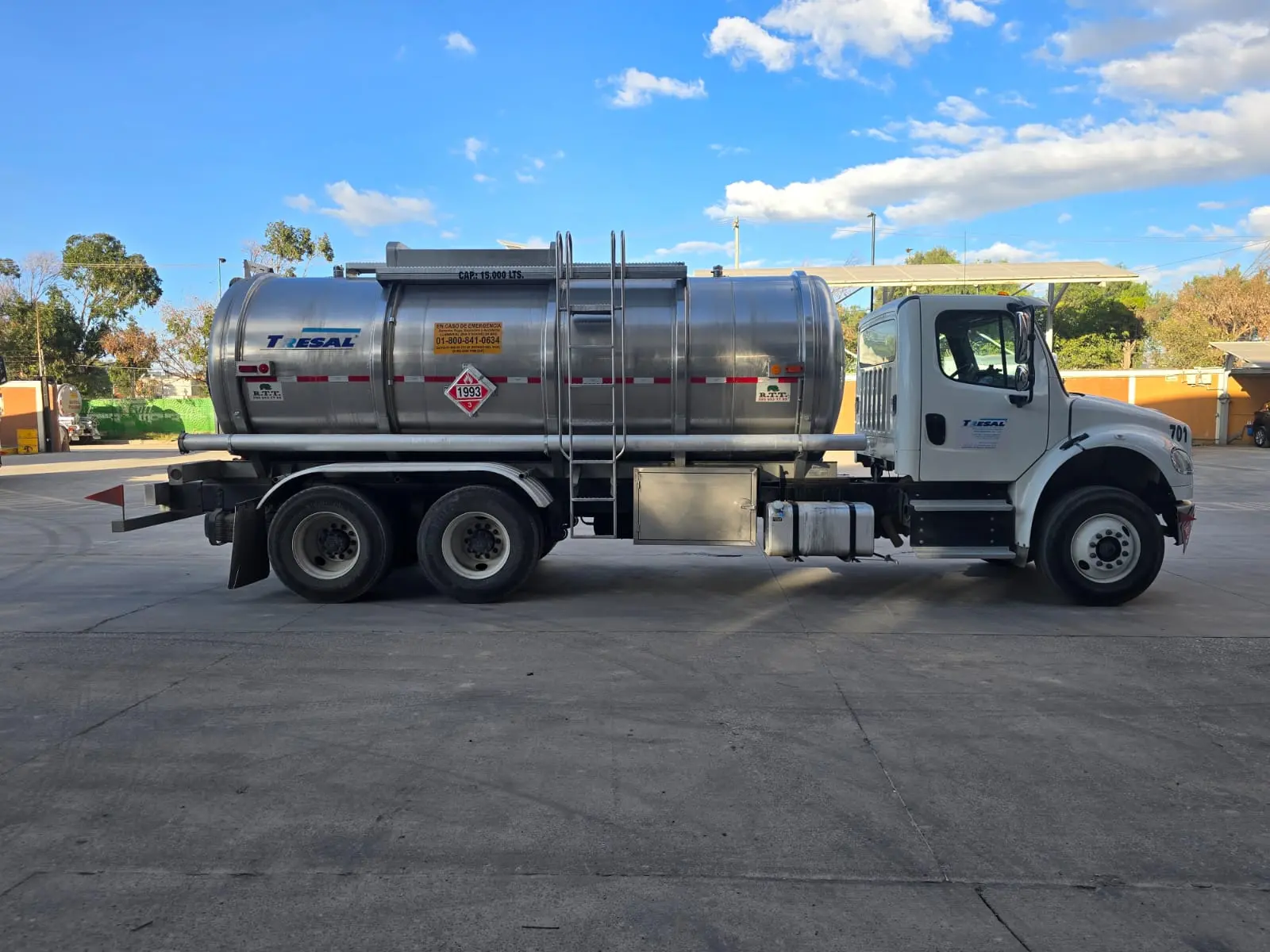
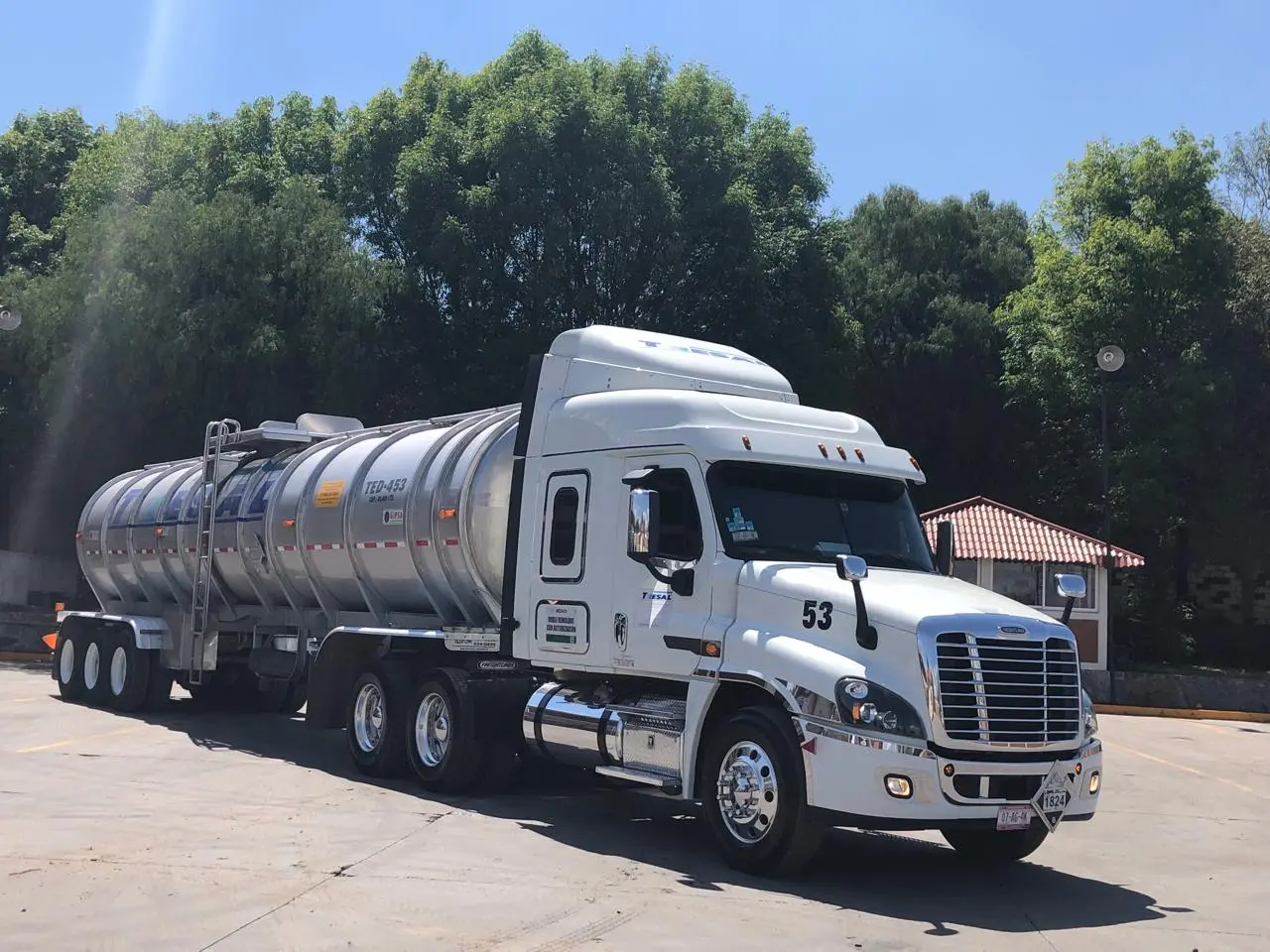
TRESAL transports caustic soda solution for Mexican industry with dedicated units and federally licensed (Category E) drivers. Sodium hydroxide solution is classified as UN1824, Class 8 (corrosive), packing group II, and its land transport is governed by NOM-002-SCT/2011. Concentrated solutions can crystallize in cold weather, so they are transported in stainless-steel tank trucks, insulated where applicable, door to door and with no third-party consolidation, under our ISO 9001:2015 (NYCE) system and satellite monitoring. With more than three decades of experience transporting bulk bases and acids, stainless-steel tank trucks and trained drivers, TRESAL offers industry a safe, traceable end-to-end operation.
What is caustic soda used for?
Caustic soda is a widely used industrial base. In Mexico it is used in: soap and detergent manufacturing, pulp and paper, textiles, water treatment, petroleum refining and biodiesel production, aluminum processing and industrial cleaning. Food-grade applications are regulated. TRESAL transports the caustic soda these industries use as an input —we do not manufacture or sell it—, connecting the producer with the customer’s plant.
Use reference: PubChem, National Library of Medicine — PubChem CID 14798.
How is caustic soda transported safely?
Sodium hydroxide is corrosive and releases heat when dissolved or diluted; it reacts violently with acids and, with metals such as aluminum and zinc, can generate flammable hydrogen. Its transport requires a dedicated unit of compatible material, strict segregation from acids, temperature control to prevent crystallization, spill prevention and protective equipment. Before each load we verify compatibility with the previous product and tank washing.
References: NIOSH Pocket Guide (CDC) · transport framework NOM-002-SCT/2011.
What precautions does handling caustic soda require?
Sodium hydroxide is highly corrosive and causes burns to skin and eyes; splashes of hot solution are especially dangerous. During loading and unloading, TRESAL personnel use alkali-resistant protective equipment, operate with accessible emergency showers and eyewash stations, and avoid contact and aerosol generation. In case of contact, the area is immediately rinsed with plenty of water and medical attention is sought per the shipment’s SDS. Our operators are trained in handling corrosive bases and in emergency response.
First-aid and handling reference: NIOSH Pocket Guide (CDC).
Each caustic soda shipment is planned end to end: TRESAL assigns a dedicated unit, confirms whether the concentrated solution requires an insulated tank, and tracks the trip with 24/7 satellite monitoring. Loads are never consolidated with third parties, which removes any risk of cross-contamination with acids or other products. Trained operators handle loading and unloading, and every delivery reaches detergent, pulp-and-paper, water-treatment and aluminum plants across Mexico documented and compliant with the applicable standards. TRESAL also coordinates documentation and delivery windows with each customer for a predictable supply chain.
Does TRESAL issue the safety data sheet (SDS)?
No. Under NOM-018-STPS-2015, the safety data sheet (SDS) is prepared by and is the responsibility of the manufacturer or importer of the chemical, not the carrier. As a carrier, TRESAL obtains the SDS from the shipper of each load and carries it on board for reference and emergency response; we neither issue nor replace that document. This separation of responsibilities is part of the regulatory compliance we provide.
Official source: NOM-018-STPS-2015 (Secretaría de Economía). In a transport emergency: SETIQ line 800 00 214 00.
More: hazardous materials transport · SICT regulations and NOMs guide for Mexico.
We also transport
Last updated: July 10, 2026