'/%3E%3Cpath%20fill='%2330c2dc'%20d='M493%20379c-14-6%2010-16%2014-16-8-1-21%203-27%203l-57-3c-7-1-12-10-10-10-3%203-37-9-27%200l9%2014c15-3%2030%208%2013%2014%203%200%2057-4%2085-2'/%3E%3Cpath%20fill='%23f9aa51'%20d='M475%20366v13q-1%207-7%207h-35q-6-1-7-7v-13q0-6%207-7h35q7%201%207%207'/%3E%3Cpath%20fill='%230c8489'%20d='M388%20335c-11%205-28-12-25-24%203-13%2028-2%2029%2014%207-2%2020%202%2025%207%209-11%2038-3%2041%2010%2011-13%2028-9%2034-3%2013-10%2033-4%2030%207-3%2012-29%2015-37%206-1%201-20%200-22%2016h-11c-3-4-2-14-1-15-11%204-29-3-34-10-7%204-25-1-29-8'/%3E%3Cpath%20fill='%23fcca3d'%20d='m419%20304-3%203c-7-4-11%208-19-2-2-3-3-10%205-16%205-3%2018-5%2019%200%203%206%207%206%204%209l4%203v9zm56%2031c-15%204-16%209-15%2012q-7-6-1-10c-9-8-10%206-8-6%201-8%2024%205%2018-15h9q-1%2015%2017%2019c0%2024%202-3-6%205-2%200-5-6-14-5'/%3E%3Cpath%20fill='%238f4620'%20d='M418%20268c-4-24%2020-46%202-44-16%201-18-2-18-2-6-7%2010-11%209-20q2%2011%205-4c2%206%204%208%205-3%205%207%2017%205%2025%2010q-3-6-10-11c-12-11%2012-9%2012-9%2033-11%2044%2012%2061%2012-17%203%2013-2%2038%2058-18-11%2012-1-7%2067%200%200-45-57-36-39-10-5-20-18-20-18-11%203-2%204-1%2020%200%200%2043%2030%2045%2036%201%206-10%204-25%207-16%202-23-20-22-10s-16%205-16%205-19-29-19-9c-39-3-20-15-20-15s10%202%208-2c-2-3-12-4-16-29m-7-66'/%3E%3Cpath%20fill='%23f9c83a'%20d='M407%20220c10%203%2015-3%2016%204%204%204-22%209-19%2014-7%203-18-10-5-16%201-5%206-3%206-3l6-8q3%207-4%209'/%3E%3Cpath%20fill='%23a8ac71'%20d='M403%20309c-15%201-19%205-23-16-18-16-8-25-7-28%201-8-12-11-15-10-1-8%2022-1%2021%209-1%209-7%2011%206%2024%205%204%203%2014%2011%2011-1%204%203%2010%207%2010m6-18c10-8-24%202-26-24-1-15%2027-22%2023-34l-5-3q1-4%207-3c19%2015-11%2027-14%2038-4%2024%2031-5%2025%2029l-3%205q-7-4-7-8m-11-54c-25%206-23-35-7-35%201%2020-15%2015%205%2015-8%200-13%2011-3%2012q1%206%205%208'/%3E%3C/svg%3E)

Hazardous Materials Transport in Mexico: Regulations and Key Requirements
TRESAL (Transportes Especializados del Altiplano, S. de R. L. de C. V.) is a Mexican bulk hazardous-materials transport company based in Cuautitlán Izcalli, State of Mexico, operating since 1988. This guide explains the classification, the Mexican Official Standards (NOMs) and the requirements for transporting hazardous materials in Mexico, particularly Class 3 (flammable liquids) and Class 8 (corrosives).
If you need a quote, see our hazardous materials transport service.
What Are Hazardous Materials Under Mexican Regulations?
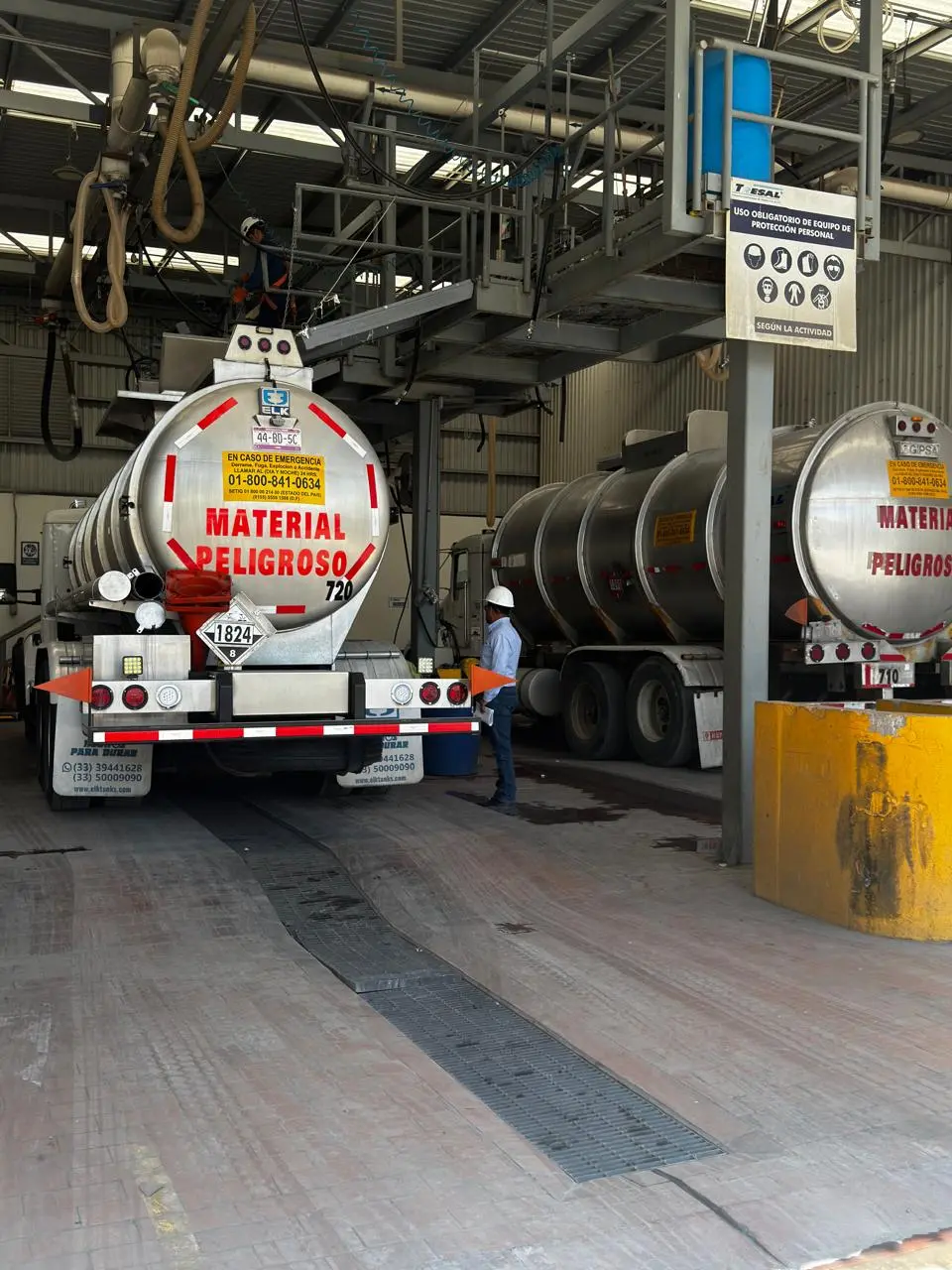
NOM-002-SCT/2011 establishes the official list of hazardous materials and substances most commonly transported in Mexico. The classification follows the international United Nations system — 9 main classes:
- Class 1: Explosives
- Class 2: Gases
- Class 3: Flammable liquids
- Class 4: Flammable solids
- Class 5: Oxidizing substances and organic peroxides
- Class 6: Toxic and infectious substances
- Class 7: Radioactive materials
- Class 8: Corrosive substances
- Class 9: Miscellaneous dangerous substances and articles
Each product is assigned a UN number — an international identifier that must appear on the documentation, the vehicle, and the Carta Porte.
The NOMs Governing Ground Transport
Mexico’s Official Standards (NOMs) issued by the SICT establish operational requirements. The most relevant for bulk chemical trucking:
NOM-002-SCT/2011 — List of most commonly transported hazardous substances. Defines classes, UN numbers, and basic requirements.
NOM-004-SCT/2008 — Vehicle identification system. Establishes the placards and hazard diamonds vehicles must display according to the material class being transported.
NOM-005-SCT/2008 — Emergency information. Requires the Emergency Response Guide and specific emergency datasheets to be carried aboard during transport.
NOM-010-SCT2/2009 — Maximum dimensions and weight. Applies to all freight, but for hazmat loads, combined weight limits have direct safety implications.
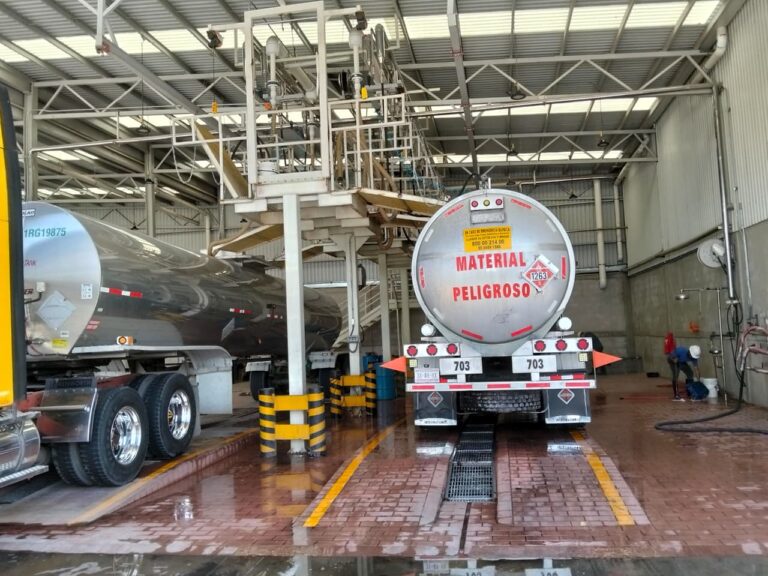
NOM-019-SCT2/2015 — Tank wash provisions. Defines requirements for washing and decontamination of tanks between loads — critical for carriers serving multiple chemical products.
NOM-020-SCT-2-2022 — Tank vehicle specifications. Defines construction specifications (DOT 306, 307, 312) for tank trucks transporting hazardous materials.
NOM-024-SCT2/2010 — Equipment specifications for hazardous materials transport. Covers valves, connections, and safety accessories.
| NOM | What it regulates |
|---|---|
| NOM-002-SCT/2011 | List of the most commonly transported dangerous substances and materials |
| NOM-004-SCT/2008 | Vehicle identification: placards and safety diamonds |
| NOM-005-SCT/2008 | Emergency information the driver must carry |
| NOM-019-SCT2/2015 | Cleaning and control of residues |
| NOM-020-SCT-2/2022 | Design and construction of cargo tanks |
| NOM-043-SCT/2003 | Shipping document |
| NOM-003-SCT/2008 | Packaging and container requirements |
Precursor Chemicals: A Separate Regulatory Layer
Beyond conventional hazardous materials, Mexico has specific controls for chemical precursors and essential chemical products — substances that can be used in synthetic drug manufacturing. This creates an additional regulatory layer that many carriers are not prepared to handle.
What Are Chemical Precursors?
The law distinguishes two categories:
- Chemical precursors: Substances whose molecular structure is incorporated into the final product of a synthetic drug. Examples: ephedrine, pseudoephedrine, phenylacetic acid.
- NOM-043-SCT/2003 — Document of transport for hazardous materials. Establishes the required information that must accompany each shipment of hazardous substances.
- NOM-003-SCT/2008 — Packaging and labeling characteristics. Establishes requirements for packaging and labeling used in the overland transport of hazardous substances.
- Essential chemical products: Substances that, while not precursors, can be used in drug production — solvents, reagents, and catalysts such as acetone, hydrochloric acid, potassium permanganate.
The Authorities Involved
Unlike conventional hazardous materials transport — where the primary authority is the SICT — precursor transport simultaneously involves:
- SICT (Ministry of Infrastructure, Communications and Transport) — carrier’s one-time notice and annual report
- COFEPRIS (Federal Commission for Protection Against Health Risks) — health control and SISUS system
- SEMAR (Mexican Navy) — incorporated into oversight after the 2023 reform
- SSPC (Ministry of Security and Citizen Protection) — organized crime surveillance
- SHCP — customs control for imports and exports
- Ministry of Health — annual reports on regulated activities
Coordinating compliance with six federal agencies simultaneously represents a considerable administrative and operational burden for any carrier.
Specific Carrier Obligations
The carrier transporting chemical precursors must:
- One-time notice to SICT — file within 30 days of the first operation with these substances
- Annual report to SICT — report transported volumes, clients served, and registered data changes, within 60 days after each year-end
- Documentation on board — carry all required documentation during transit, including the Carta Porte with precise product data
- Loss control — any unusual loss must be reported and justified
- SISUS update — COFEPRIS’s Comprehensive Substance System centralizes digital procedures
Consequences of Non-Compliance
Penalties for non-compliance in precursor transport are severe:
- Administrative fines for activities outside the registered business purpose
- Prison sentences of 8 to 15 years for transporting precursors without proper authorizations
- Seizure of the vehicle and cargo
- Cancellation of transport permits
The level of road scrutiny for these substances is significantly higher than for other hazardous materials — operators may be subject to coordinated inspections by SICT, SEMAR, and security forces.
Why This Matters When Choosing Your Carrier
At TRESAL provide hazardous materials transport in Mexico under our current SICT notice for chemical precursors and essential chemical products, and we comply with the corresponding annual report. For a company generating this type of cargo, verifying that your carrier has this registration in order is not optional:
- Current one-time notice with SICT for these substances
- Operators trained in precursor-specific procedures
- Control and traceability systems that support COFEPRIS and SICT audits
- Corporate purpose that explicitly includes the transport of these substances
A carrier that is not properly registered does not only put its own operation at risk — it puts the cargo generator’s operation at risk as well.
Requirements for the Carrier
To legally operate hazardous materials transport in Mexico, the carrier must have:
- Current SICT permit for hazardous materials and waste transport
- Drivers with federal type E license and hazmat training
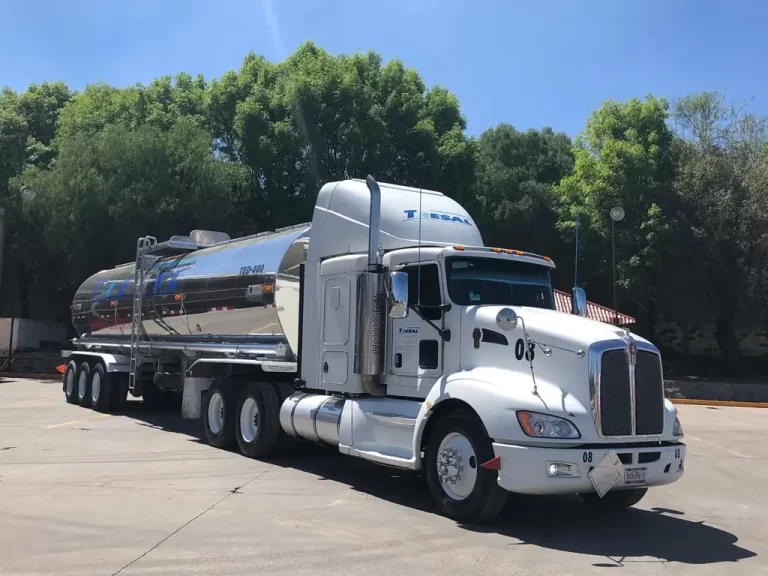
- Vehicles compliant with NOM-020-SCT-2-2022 — tank design and construction specifications
- On-board emergency equipment appropriate for the product transported
- Product-specific Emergency Datasheet
- CFDI with Carta Porte complement version 3.1 — mandatory since 2022
Cargo Generator’s Responsibility
Regulations do not fall solely on the carrier. The cargo generator has specific responsibilities:
- Hire only SICT-authorized carriers
- Provide correct product information (technical name, UN number, class, concentration)
- Ensure packaging and labeling comply with NOM-003-SCT/2008
- Verify that the assigned vehicle is compatible with the product
In case of an incident, liability can extend to the generator if they failed to verify that the carrier met regulatory requirements.
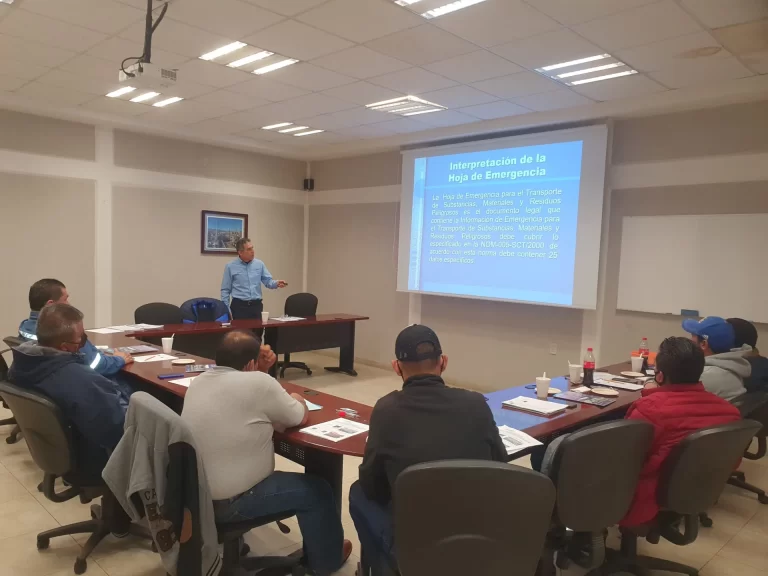
Every TRESAL unit carrying regulated substances is equipped with emergency response equipment as required by current regulations. Drivers receive ongoing training in contingency management, first aid, and personal protective equipment use. Coordination with local and federal authorities is an integral part of the operational protocol to ensure an effective response to any on-route incident.
How TRESAL Operates Under This Framework
At TRESAL, our entire operation is designed to comply with SICT regulations (see our certifications) and applicable NOMs:
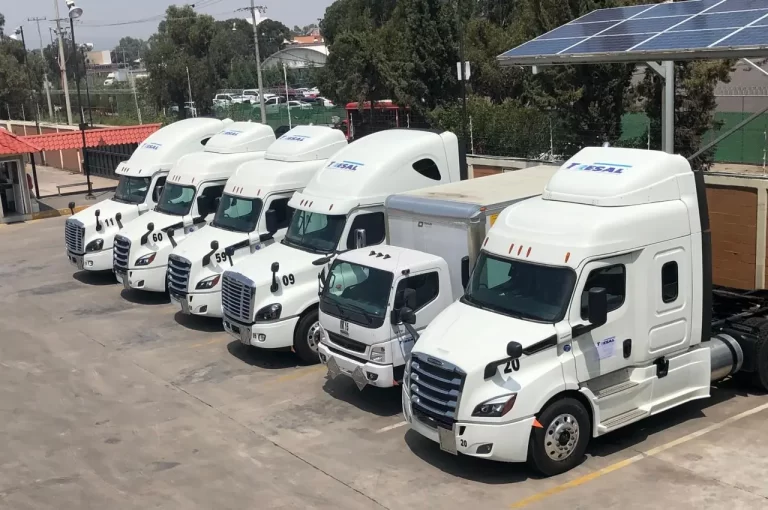
- Tank truck fleet compliant with NOM-020-SCT-2-2022 specifications
- Drivers with federal licenses and hazardous materials training
- Current notice with SICT for chemical precursor transport
- Washing centers operating under NOM-019-SCT2/2015 in Mexico City and San Luis Potosí
- ISO 9001:2015 certified management system documenting every operation
- CFDI with Carta Porte complement 3.1 on every service
We have been serving Mexico’s chemical industry for over 38 years — regulatory compliance is not an add-on, it is the foundation of our operation.
Need an authorized carrier for hazardous materials with nationwide coverage?
References
Mexico
1. Reglamento para el Transporte Terrestre de Materiales y Residuos Peligrosos — Mexico’s federal regulation for carriers, shippers, and consignees of hazardous materials.
2. Mexican Official Standards (NOMs) for transport — PLATIICA portal. Full text of NOM-002, NOM-004, NOM-005, NOM-019, NOM-020, and NOM-043.
3. “New regulations for the transport of hazardous materials and waste” — Santamarina y Steta (law firm, Mexico). Analysis of NOM-002-SCT-SEMAR-ARTF/2023.
4. “NOMs to be updated for freight transport” — T21 Magazine, December 2020.
5. NOM-002-SCT/2011 — Listado de sustancias peligrosas. PLATIICA.
6. NOM-003-SCT/2008 — Etiquetas de envases para materiales peligrosos. PLATIICA.
7. NOM-004-SCT/2008 — Identificación de unidades de transporte. PLATIICA.
8. NOM-005-SCT/2008 — Información de emergencia. PLATIICA.
9. NOM-019-SCT2/2015 — Limpieza de autotanques. PLATIICA.
10. NOM-020-SCT-2-2022 — Construcción de autotanques. PLATIICA.
11. NOM-043-SCT/2003 — Documento de embarque. PLATIICA.
12. NOM-010-SCT2/2009 — Disposiciones de compatibilidad y segregación para el transporte de materiales peligrosos. PLATIICA.
13. NOM-024-SCT2/2010 — Especificaciones para la construcción y reconstrucción de recipientes intermedios a granel (RIG). PLATIICA.
United States
14. PHMSA — Pipeline and Hazardous Materials Safety Administration — U.S. Department of Transportation.
15. 49 CFR Subchapter C — Hazardous Materials Regulations — U.S. Code of Federal Regulations.
France / European Union
16. ADR — European Agreement on the International Carriage of Dangerous Goods by Road — UNECE. International framework with which Mexican regulations are harmonized.
What are hazardous materials under Mexican regulations?
Hazardous materials are substances that pose a risk during transport. In Mexico, NOM-002-SCT/2011 sets the official list and classifies them into 9 UN classes, each with an identifying UN number.
Which classes of hazardous materials does TRESAL transport?
TRESAL transports Class 3 (flammable liquids) and Class 8 (corrosive) hazardous materials, plus bulk hazardous chemical products, in SS 304 and 316L stainless-steel cargo tanks.
Which NOMs govern the ground transport of hazardous materials in Mexico?
The main ones are NOM-002-SCT/2011 (classification), NOM-004-SCT/2008 (vehicle identification), NOM-005-SCT/2008 (emergency information), NOM-020-SCT-2/2022 (cargo tanks) and NOM-043-SCT/2003 (shipping document).
What is required to transport chemical precursors?
The carrier must file the single notice with SICT, carry the required documentation in the vehicle, control product losses, and keep its registration current in COFEPRIS’s SISUS system.