'/%3E%3Cpath%20fill='%2330c2dc'%20d='M493%20379c-14-6%2010-16%2014-16-8-1-21%203-27%203l-57-3c-7-1-12-10-10-10-3%203-37-9-27%200l9%2014c15-3%2030%208%2013%2014%203%200%2057-4%2085-2'/%3E%3Cpath%20fill='%23f9aa51'%20d='M475%20366v13q-1%207-7%207h-35q-6-1-7-7v-13q0-6%207-7h35q7%201%207%207'/%3E%3Cpath%20fill='%230c8489'%20d='M388%20335c-11%205-28-12-25-24%203-13%2028-2%2029%2014%207-2%2020%202%2025%207%209-11%2038-3%2041%2010%2011-13%2028-9%2034-3%2013-10%2033-4%2030%207-3%2012-29%2015-37%206-1%201-20%200-22%2016h-11c-3-4-2-14-1-15-11%204-29-3-34-10-7%204-25-1-29-8'/%3E%3Cpath%20fill='%23fcca3d'%20d='m419%20304-3%203c-7-4-11%208-19-2-2-3-3-10%205-16%205-3%2018-5%2019%200%203%206%207%206%204%209l4%203v9zm56%2031c-15%204-16%209-15%2012q-7-6-1-10c-9-8-10%206-8-6%201-8%2024%205%2018-15h9q-1%2015%2017%2019c0%2024%202-3-6%205-2%200-5-6-14-5'/%3E%3Cpath%20fill='%238f4620'%20d='M418%20268c-4-24%2020-46%202-44-16%201-18-2-18-2-6-7%2010-11%209-20q2%2011%205-4c2%206%204%208%205-3%205%207%2017%205%2025%2010q-3-6-10-11c-12-11%2012-9%2012-9%2033-11%2044%2012%2061%2012-17%203%2013-2%2038%2058-18-11%2012-1-7%2067%200%200-45-57-36-39-10-5-20-18-20-18-11%203-2%204-1%2020%200%200%2043%2030%2045%2036%201%206-10%204-25%207-16%202-23-20-22-10s-16%205-16%205-19-29-19-9c-39-3-20-15-20-15s10%202%208-2c-2-3-12-4-16-29m-7-66'/%3E%3Cpath%20fill='%23f9c83a'%20d='M407%20220c10%203%2015-3%2016%204%204%204-22%209-19%2014-7%203-18-10-5-16%201-5%206-3%206-3l6-8q3%207-4%209'/%3E%3Cpath%20fill='%23a8ac71'%20d='M403%20309c-15%201-19%205-23-16-18-16-8-25-7-28%201-8-12-11-15-10-1-8%2022-1%2021%209-1%209-7%2011%206%2024%205%204%203%2014%2011%2011-1%204%203%2010%207%2010m6-18c10-8-24%202-26-24-1-15%2027-22%2023-34l-5-3q1-4%207-3c19%2015-11%2027-14%2038-4%2024%2031-5%2025%2029l-3%205q-7-4-7-8m-11-54c-25%206-23-35-7-35%201%2020-15%2015%205%2015-8%200-13%2011-3%2012q1%206%205%208'/%3E%3C/svg%3E)

Tank Truck Washing: Chemical, Food-Grade, Kosher
Own interior washing centers in Cuautitlán Izcalli and San Luis Potosí. ISO 9001:2015 certified operation since 1988. Chemical, food-grade, and Kosher washing for external fleets and TRESAL units.
38
years of own internal washing capability
ISO 9001
certified by NYCE, EMA-accredited
2
bases — Cuautitlán and San Luis Potosí
Kosher KA
Vaad Hakashrut supervision
Tank Truck Washing Cannot Be Improvised
Tank truck interior washing is not just another cleaning task. It is a documented process where compatibility between the previous load and the next determines whether a tank can leave loaded or stay on hold. Cross-contamination from a poorly executed wash can destroy an entire customer batch, trigger dangerous chemical reactions, or invalidate a food-grade certification. That is why TRESAL (Transportes Especializados del Altiplano, S. de R. L. de C. V.) operates two own washing centers under controlled procedures, integrated into a Quality Management System ISO 9001:2015 certified by NYCE S.C., an organization accredited by the Mexican Accreditation Entity (EMA).
Unlike a public washing center without traceability, at TRESAL every unit processed generates quality records at each stage: daily unit status, request, wash tracking sheet, final inspection, and conditioning certificate with traceable unique folio.
TRESAL operates 100% of its tank truck fleet in 304 and 316L stainless steel, backs every wash with 38 years of experience in chemical products, and has kept its transport operation ISO 9001 certified for 12 years.
Three Washing Modalities by Product Type
Chemical Washing for Hazardous Materials
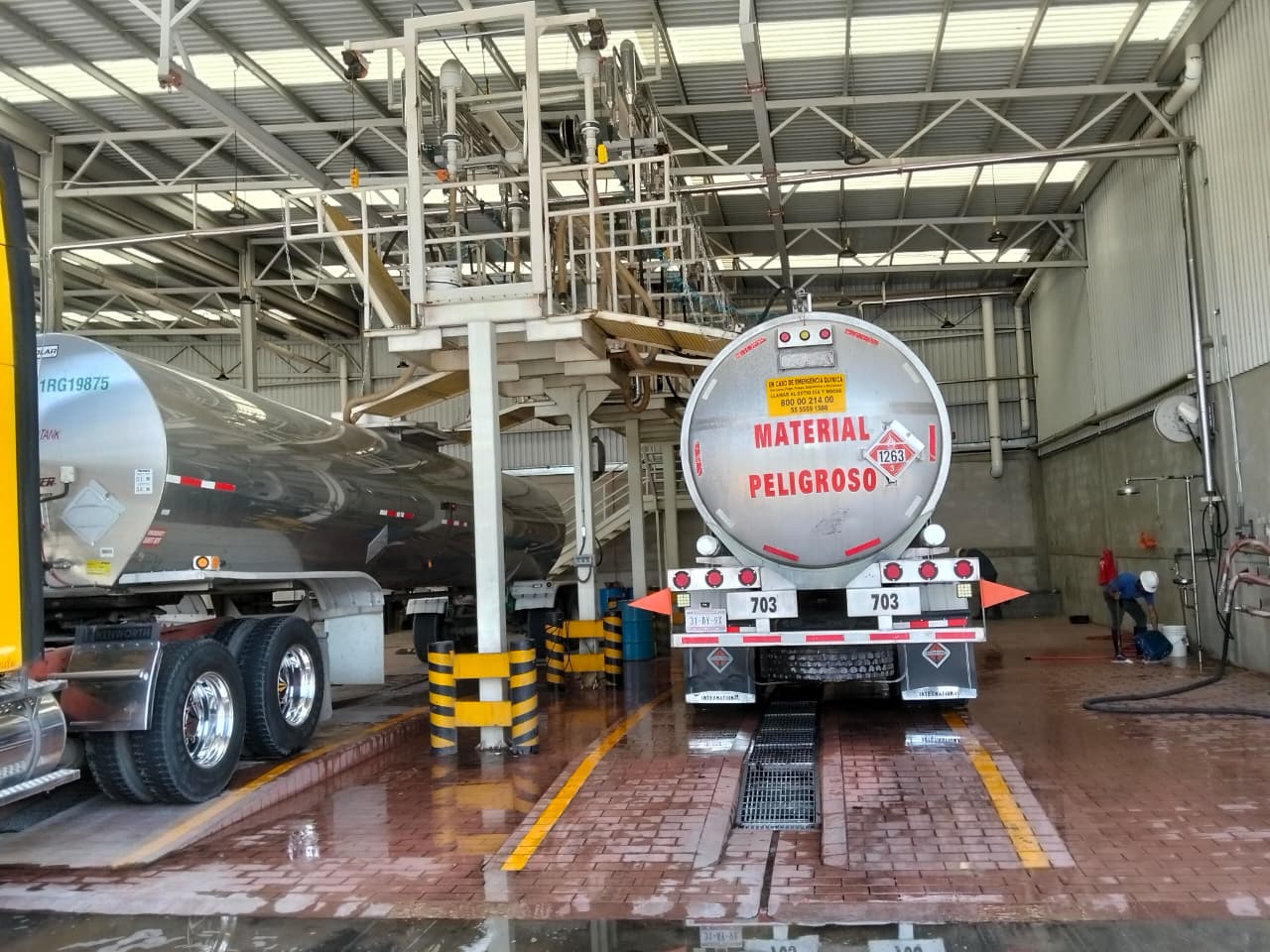
For Class 3 flammable and Class 8 corrosive residues. Includes preliminary verification of remnants, Teflon removal at washing ports, placement of high-pressure rotary spinners, rinse cycles with chemicals selected according to the last product transported, compressed-air drying, and manual drying. Explosivity is measured with a calibrated explosimeter before releasing the unit. We comply with Mexican standards for cleaning and remnant control in hazardous materials transport.
Food-Grade Washing
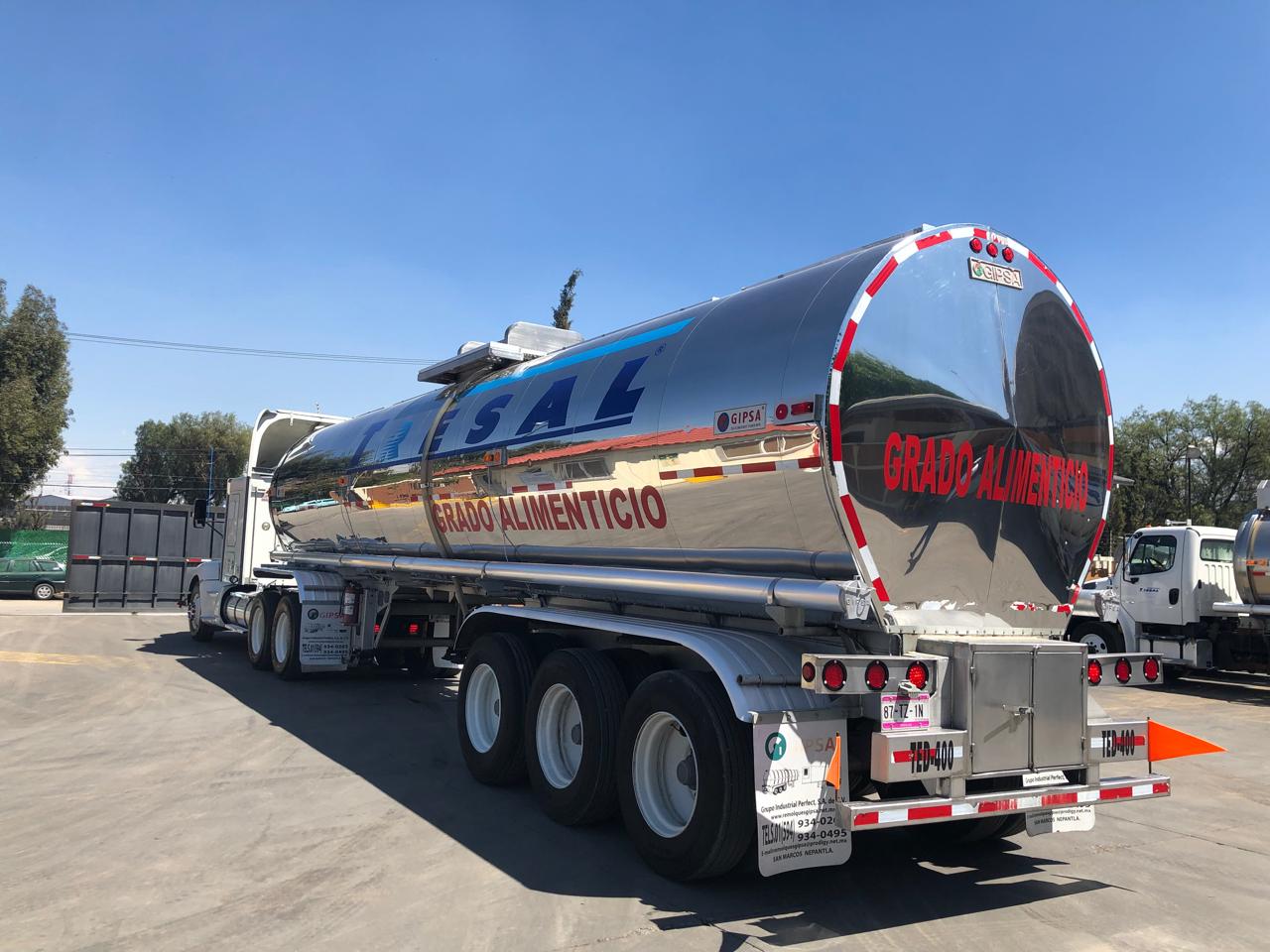
TRESAL performs food-grade washing at a dedicated station with stainless steel piping and high-pressure hot water in a single-pass system, with no water recirculation and no cross-contamination between units. Conditioning is performed in line with the food-transport hygiene requirements of Mexico’s NOM-251-SSA1-2009. Final inspection is done with hairnet, mask, clean uniform, and disposable shoe covers, and every released wash is delivered with a conditioning certificate. We serve customers in the beverage industry, specialty chemicals, and bulk food who require audited documentation.
Kosher Washing
Under Vaad Hakashrut KA supervision. Thermal treatment, non-recirculated water, dedicated bay, and rabbinical record. Available at both bases. Kosher certificates are delivered only to the client with a control number; they are not published.
Washing with Gasket Replacement for Incompatible Loads
Some chemical products are not compatible with one another. The chemistry of the previous product reacts with the next, or impregnates gaskets, valves, and hoses in ways that no wash cycle alone can guarantee a clean unit. In those cases, washing harder is not enough: gaskets must be replaced. TRESAL offers this service integrated with the wash, first evaluating chemical compatibility against the next product’s safety data sheet, identifying which gaskets (dome, washing ports, discharge valve) must be replaced, and performing the swap at the same station alongside the corresponding wash cycle. The client receives the unit ready to load the new product, with no residual contamination risk and without moving the tank to an external shop.
It is a service offered by very few washing centers in Mexico, drawn from TRESAL’s own spare-parts inventory at each base.
Compatibility Without Reconditioning
On express client request, certain product pairs can be loaded without prior reconditioning when chemical compatibility allows it: oils of the same family with each other, the same product over the same product, or a product that is part of the new product’s composition. This validation is performed by TRESAL’s technical team on a case-by-case basis. For products that can dry out or form deposits, the unit is steam-treated before the next load even if it is the same product.
| Modality | For which products | What it includes |
|---|---|---|
| Chemical washing for hazardous materials | Class 3 flammable and Class 8 corrosive residues. | High-pressure spinners, chemicals selected per the last transported product, drying, and explosimeter measurement before release. |
| Food-grade washing | Vinegars, juices, glycerin, and monoethylene glycol. | Dedicated station and full sanitization. |
| Kosher washing | Loads requiring kosher status. | Kosherization under Vaad Hakashrut KA certification. |
Kosher Tank Truck Washing at TRESAL — Vaad Hakashrut KA Certified
TRESAL holds an active Kosher certification issued by the Vaad Hakashrut KA, a rabbinical Kosher supervision authority operating in Mexico. This certification is required by food-industry clients transporting Kosher-certified products: juices, vinegars, food-grade glycerin, Kosher-grade ethanol, syrups, among others.
TRESAL Kosher protocol:
- Thermal treatment: water at 200°F (93.33°C) minimum for 15 minutes — exceeds industry minimum standard
- Dedicated wash bays at our centers in Cuautitlán Izcalli (Mexico City area) and San Luis Potosí
- Rabbinical supervision with documented chain of custody for every wash
- Full traceability: Kosher conditioning certificate with unique control number delivered to the client
- Documented compatibility: prior verification of previous loads to ensure Kosher conformity
The Kosherization process applies to the interior wash of the tank truck between loads. Tank trucks are certified Kosher for their next load during a defined period stated in the certificate.
For a complete guide on what Kosher tank truck washing is, who needs it, and how the process works, see our article: Kosher Tank Truck Washing in Mexico — Complete Guide.
Two Washing Centers, Nationwide Coverage
TRESAL operates two tank wash facilities in Mexico. Our tank wash facility is located in Cuautitlán Izcalli, and our tank wash San Luis Potosí facility serves the Bajío region. Both centers provide tank truck washing for chemicals, food-grade products, and Kosher washing under Vaad Hakashrut KA certification. We service internal and external fleets with sanitized stainless steel 304 and 316L tank trucks, and deliver a conditioning certificate with documented traceability after every wash.
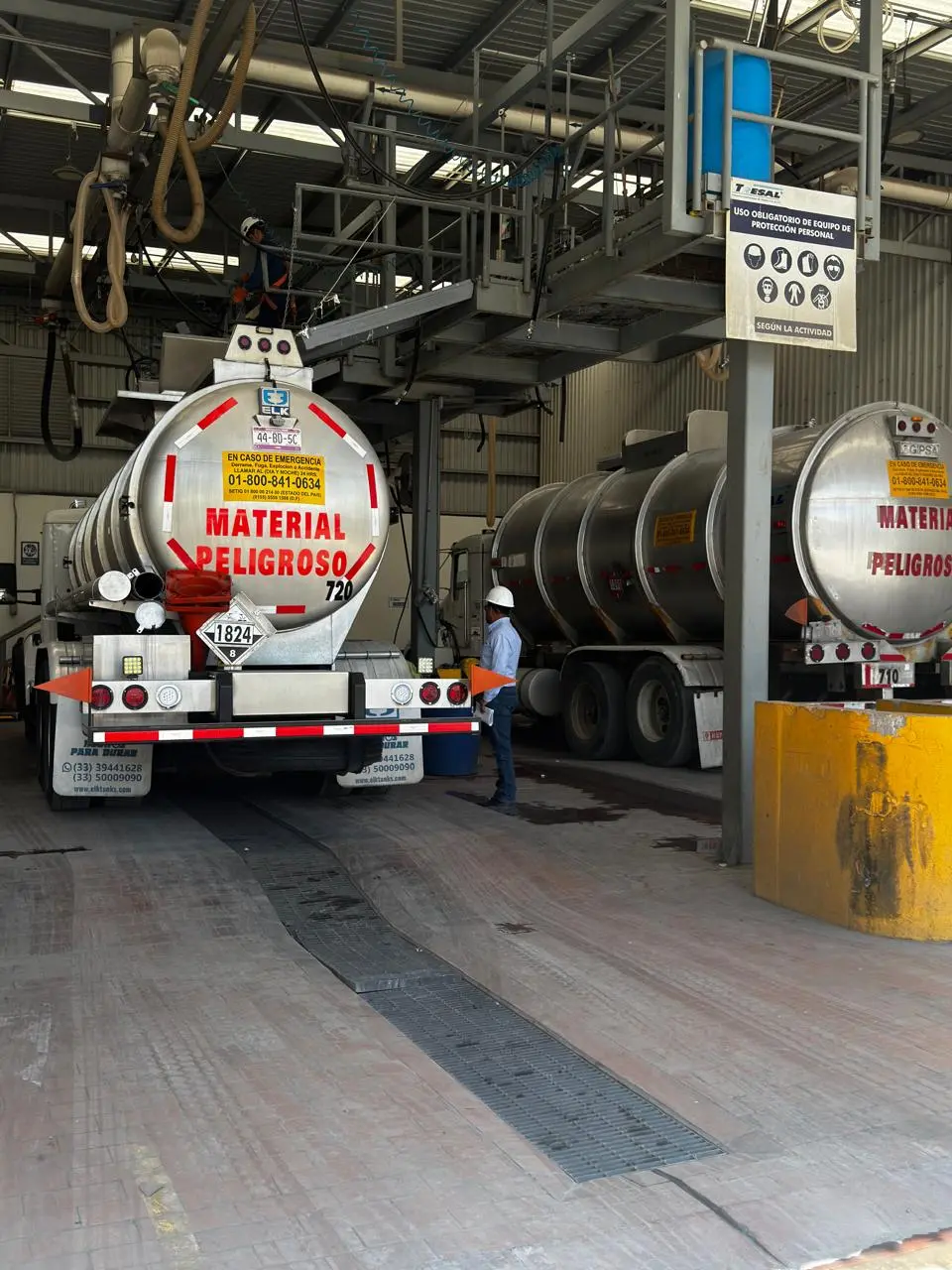
Cuautitlán Izcalli Washing Center (Mexico City)
Delfín No. 9, Parque Industrial Cuamatla, CP 54730. Station with capacity for two simultaneous units (two trailers, two torton tanks, or any combination). Physical earth grounding to eliminate static electricity during handling of flammable remnants.
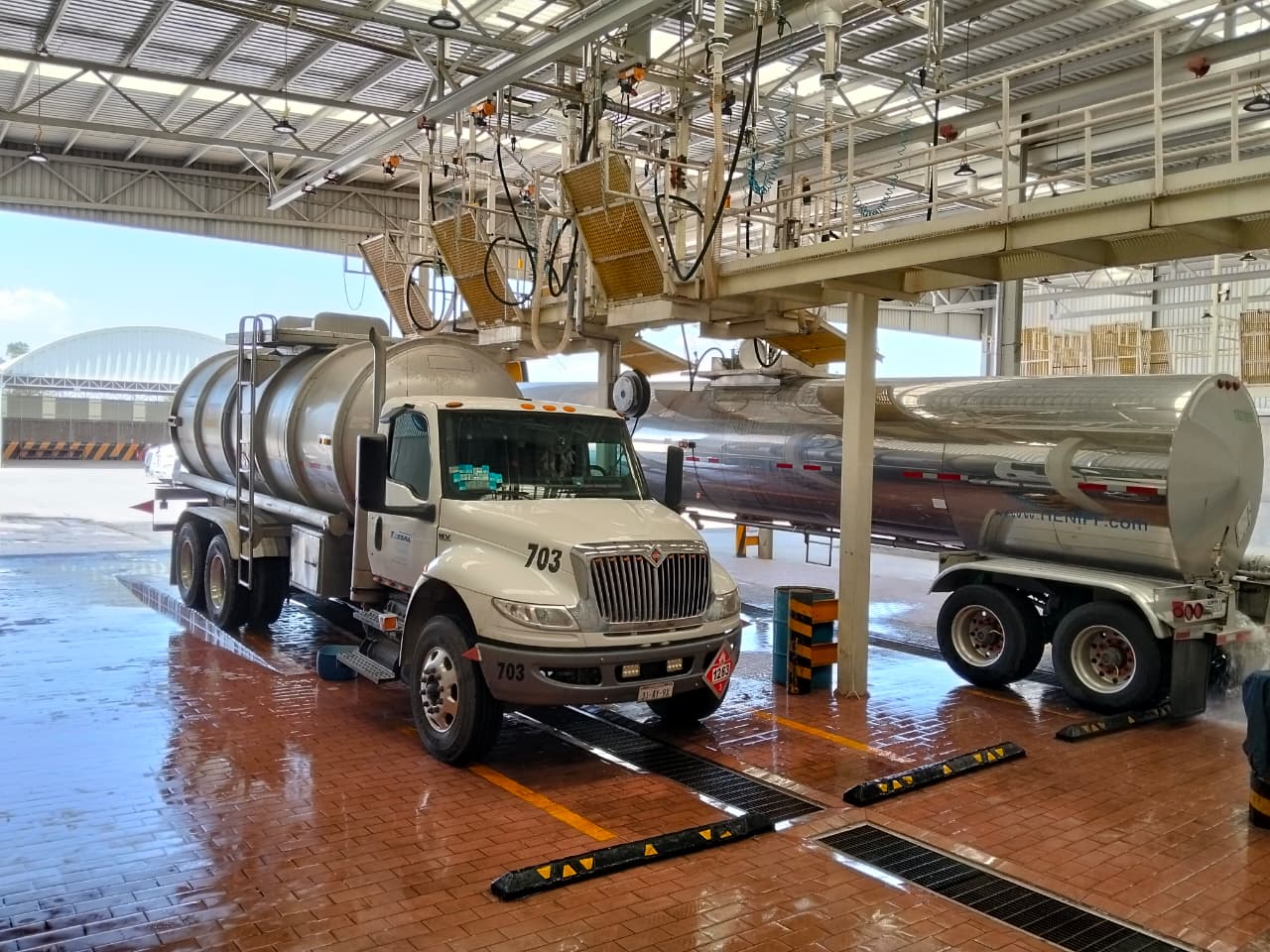
San Luis Potosí Washing Center
Av. Planeación 175, Zona Industrial Primera Sección, CP 78395. Same operational capacity, same stainless steel piping, same procedure. Contact: Victoria Sánchez Colunga.
Both facilities share the same origin: by 1988 TRESAL was already washing the interior of its tanks with steam vaporization, long before public washing centers existed in Mexico. In 2019 we began building a modern washing center, and in June 2021 we commissioned the current high-pressure, hot-water, stainless-steel single-pass system. 38 continuous years of own internal washing capability: no Mexican chemical carrier can claim the same. This hot-water, high-pressure system is also a more eco-friendly wash: it cleans with less water and in less time than traditional methods.
The Process Step by Step
- Status notification: the yard supervisor reports daily to the dispatcher which units are available.
- Wash request: the dispatcher submits the request by email and phone, indicating the previous product.
- Method selection: based on the last product transported, we assign the corresponding cycle.
- Tracking sheet: five sections — general data, initial activities, interior cleaning, subsequent activities, and final inspection.
- Exterior conditioning: high-pressure hot water and, if needed, polishing acid at a concentration determined by the supervisor based on the product’s safety data sheet.
- Remnant verification and Teflon removal at washing ports.
- Placement of high-pressure rotary spinners according to the tank design.
- Interior wash with selected chemicals and controlled rinses.
- Gasket replacement when incompatibility requires it.
- Washing of the valve box, discharge valve, lines, hoses, pump, and hose holders.
- Compressed-air drying and manual drying with personnel in clean uniform, hairnet, mask, and shoe covers.
- Explosivity measurement with a calibrated explosimeter.
- Final inspection by the yard supervisor.
- Issuance of the conditioning certificate with traceable unique folio.
Documented Regulatory Compliance
Mexican regulatory framework
Tank truck interior washing in Mexico is regulated mainly by NOM-019-SCT2/2015, which sets technical specifications and general provisions for the cleaning and remnant control of hazardous substances and waste. TRESAL also complies with:
- NOM-019-SCT2/2015 — Cleaning and remnant control in hazardous materials and waste transport units
- NOM-002-SCT-SEMAR-ARTF/2023 — Official list of hazardous substances and materials (current; supersedes NOM-002-SCT/2011)
- NOM-020-SCT-2-2022 — Specifications for SICT 406, 407, and 412 tank trucks
- ISO 9001:2015 — NYCE certificate 2014CRE-440 valid through November 2027, international IQNET recognition MX-2014CRE-440. Scope explicitly covers Conditioning, Cleaning, and Sanitization of Units
Recognized international standards
For clients exporting to the United States or operating under international standards, our process is compatible with:
- 49 CFR 173.29 (US DOT) — Empty packagings: treatment of empty tank trucks with remnants
- 49 CFR 178.345 — General specifications DOT 406, 407, and 412 (cargo tank motor vehicles)
- FDA 21 CFR Part 117 — Current Good Manufacturing Practice for human food (applicable to food-grade washing)
- JPA Tank Wash Guidelines — Industry standard for food-grade tank wash in North America
- Vaad Hakashrut KA — Internationally recognized rabbinical Kosher standard
“Especificaciones técnicas y disposiciones generales para la limpieza y control de remanentes de substancias y residuos peligrosos en las unidades que transportan materiales y residuos peligrosos.”
NOM-019-SCT2/2015, official title (in Spanish). SICT, Mexican Official Gazette (DOF)
Washing for External Fleets
Both centers operate for third parties under the same procedure we apply to our own fleet. We service torton tanks, tractor-tankers, isotanks, and rigid tank trucks. To request a fleet-wash quote, write to Alejandro Sánchez indicating location, previous product, unit capacity, and estimated monthly volume.
Conditioning Certificate with Traceability
Every released wash is documented with a Unit Conditioning and Cleaning Certificate, with a unique folio traceable to the date and to the supervisor who signed off the release. The certificate is preserved as documented information of the ISO 9001:2015 Quality Management System and delivered to the client upon request. For clients with specific audit requirements, we issue certificates with the particular information required.
Tank conditioning and cleaning is a shared responsibility. TRESAL applies the described procedures and delivers the unit with a conditioning certificate. Final inspection and acceptance of the unit to load the next product is the customer’s responsibility; the customer must verify that the cleanliness meets their own standards and the specific requirements of the product to be loaded.
TRESAL operates two dedicated tank truck washing Mexico centers — one in Cuautitlán Izcalli and another in San Luis Potosí — providing chemical, food-grade, and Kosher tank washing Mexico industry partners require. Each center delivers traceability documentation, ISO 9001:2015 quality management, and Vaad Hakashrut KA Kosher certification on request. Service is available for both TRESAL fleet and external operators.
Frequently Asked Questions
Can you wash my tank if it’s not TRESAL’s?
Yes. Both centers (Mexico City and SLP) are open to external fleets under the same procedure we apply to our own fleet.
How much does a wash cost?
It depends on the previous product, the required method, and whether it includes Kosher or food-grade. We quote by email within 24 business hours.
What do you deliver after the wash?
A Conditioning and Cleaning Certificate with unique folio, stating the previous product, method applied, and signature of the supervisor who released the unit.
Do you offer Kosher washing?
Yes, under Vaad Hakashrut KA supervision, with thermal treatment and a dedicated bay. Certificates are delivered to the client with a control number; they are not published.
Can you wash tanks that carried products incompatible with the next product?
Yes. When chemical incompatibility requires replacing dome, valve, or washing-port gaskets, we do it at the same station alongside the wash cycle. The client receives the unit ready to load, without having to move the tank to an external shop.
How long does a full wash take?
It depends on the method. A standard chemical wash with full drying and explosivity verification typically takes several hours. We schedule by shift according to the base’s queue.
Related Resources
For more on the washing process, read our articles:
- Tank truck interior washing: process, compatibility, and responsibility
- 5 dangerous mistakes in tank truck washing
- Kosher tank truck washing in Mexico
And our related pages:
Need to wash your fleet in Cuautitlán or San Luis Potosí?
We respond within 24 business hours.
Last updated: June 29, 2026