'/%3E%3Cpath%20fill='%2330c2dc'%20d='M493%20379c-14-6%2010-16%2014-16-8-1-21%203-27%203l-57-3c-7-1-12-10-10-10-3%203-37-9-27%200l9%2014c15-3%2030%208%2013%2014%203%200%2057-4%2085-2'/%3E%3Cpath%20fill='%23f9aa51'%20d='M475%20366v13q-1%207-7%207h-35q-6-1-7-7v-13q0-6%207-7h35q7%201%207%207'/%3E%3Cpath%20fill='%230c8489'%20d='M388%20335c-11%205-28-12-25-24%203-13%2028-2%2029%2014%207-2%2020%202%2025%207%209-11%2038-3%2041%2010%2011-13%2028-9%2034-3%2013-10%2033-4%2030%207-3%2012-29%2015-37%206-1%201-20%200-22%2016h-11c-3-4-2-14-1-15-11%204-29-3-34-10-7%204-25-1-29-8'/%3E%3Cpath%20fill='%23fcca3d'%20d='m419%20304-3%203c-7-4-11%208-19-2-2-3-3-10%205-16%205-3%2018-5%2019%200%203%206%207%206%204%209l4%203v9zm56%2031c-15%204-16%209-15%2012q-7-6-1-10c-9-8-10%206-8-6%201-8%2024%205%2018-15h9q-1%2015%2017%2019c0%2024%202-3-6%205-2%200-5-6-14-5'/%3E%3Cpath%20fill='%238f4620'%20d='M418%20268c-4-24%2020-46%202-44-16%201-18-2-18-2-6-7%2010-11%209-20q2%2011%205-4c2%206%204%208%205-3%205%207%2017%205%2025%2010q-3-6-10-11c-12-11%2012-9%2012-9%2033-11%2044%2012%2061%2012-17%203%2013-2%2038%2058-18-11%2012-1-7%2067%200%200-45-57-36-39-10-5-20-18-20-18-11%203-2%204-1%2020%200%200%2043%2030%2045%2036%201%206-10%204-25%207-16%202-23-20-22-10s-16%205-16%205-19-29-19-9c-39-3-20-15-20-15s10%202%208-2c-2-3-12-4-16-29m-7-66'/%3E%3Cpath%20fill='%23f9c83a'%20d='M407%20220c10%203%2015-3%2016%204%204%204-22%209-19%2014-7%203-18-10-5-16%201-5%206-3%206-3l6-8q3%207-4%209'/%3E%3Cpath%20fill='%23a8ac71'%20d='M403%20309c-15%201-19%205-23-16-18-16-8-25-7-28%201-8-12-11-15-10-1-8%2022-1%2021%209-1%209-7%2011%206%2024%205%204%203%2014%2011%2011-1%204%203%2010%207%2010m6-18c10-8-24%202-26-24-1-15%2027-22%2023-34l-5-3q1-4%207-3c19%2015-11%2027-14%2038-4%2024%2031-5%2025%2029l-3%205q-7-4-7-8m-11-54c-25%206-23-35-7-35%201%2020-15%2015%205%2015-8%200-13%2011-3%2012q1%206%205%208'/%3E%3C/svg%3E)

Bulk Food-Grade Transport in Mexico: Complete Guide
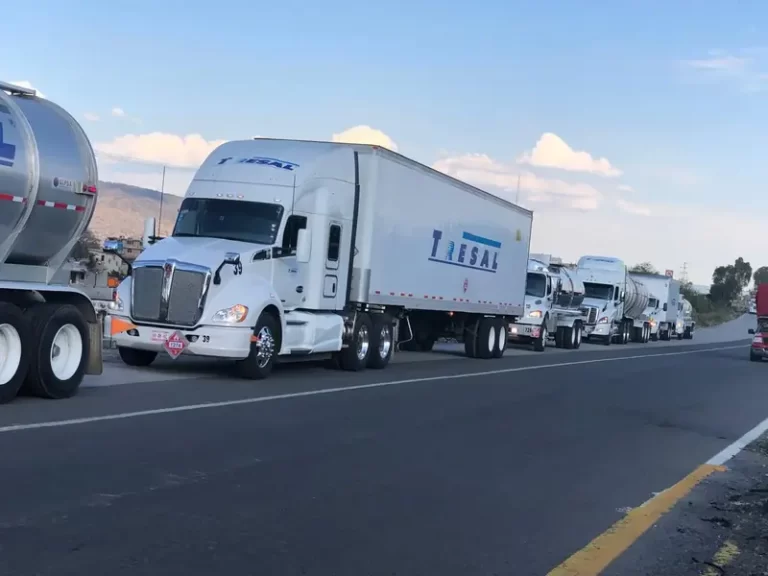
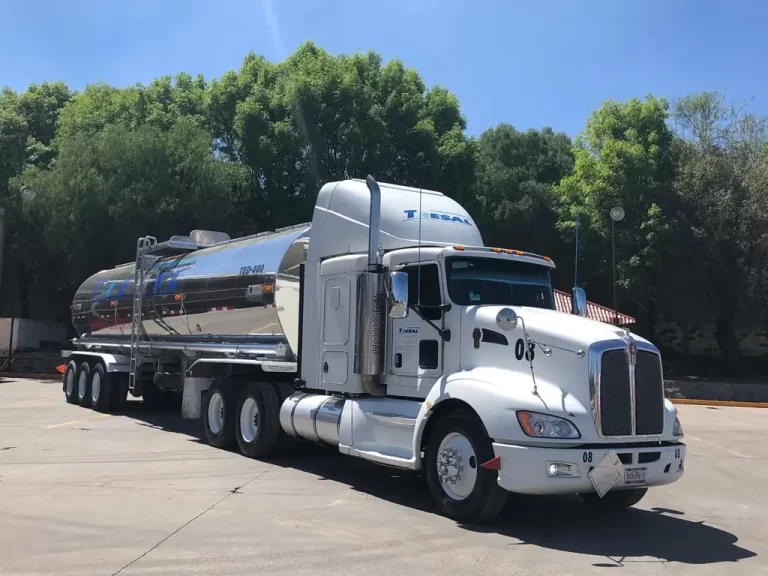
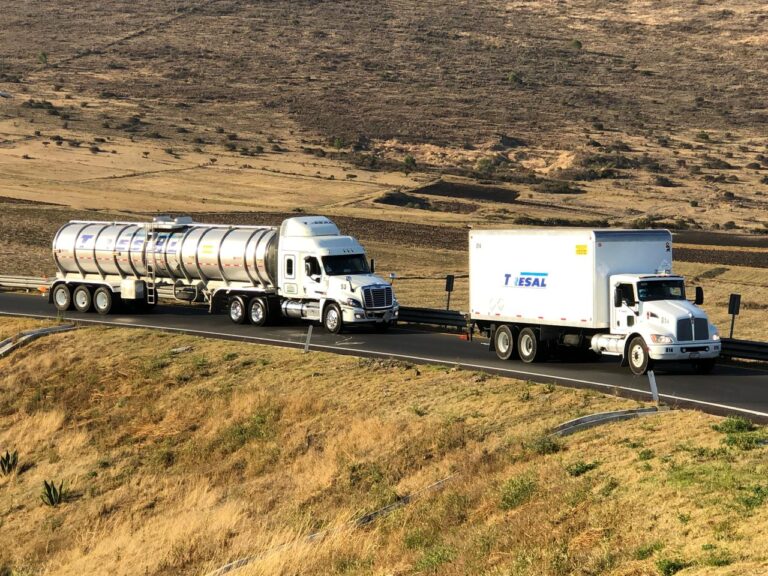
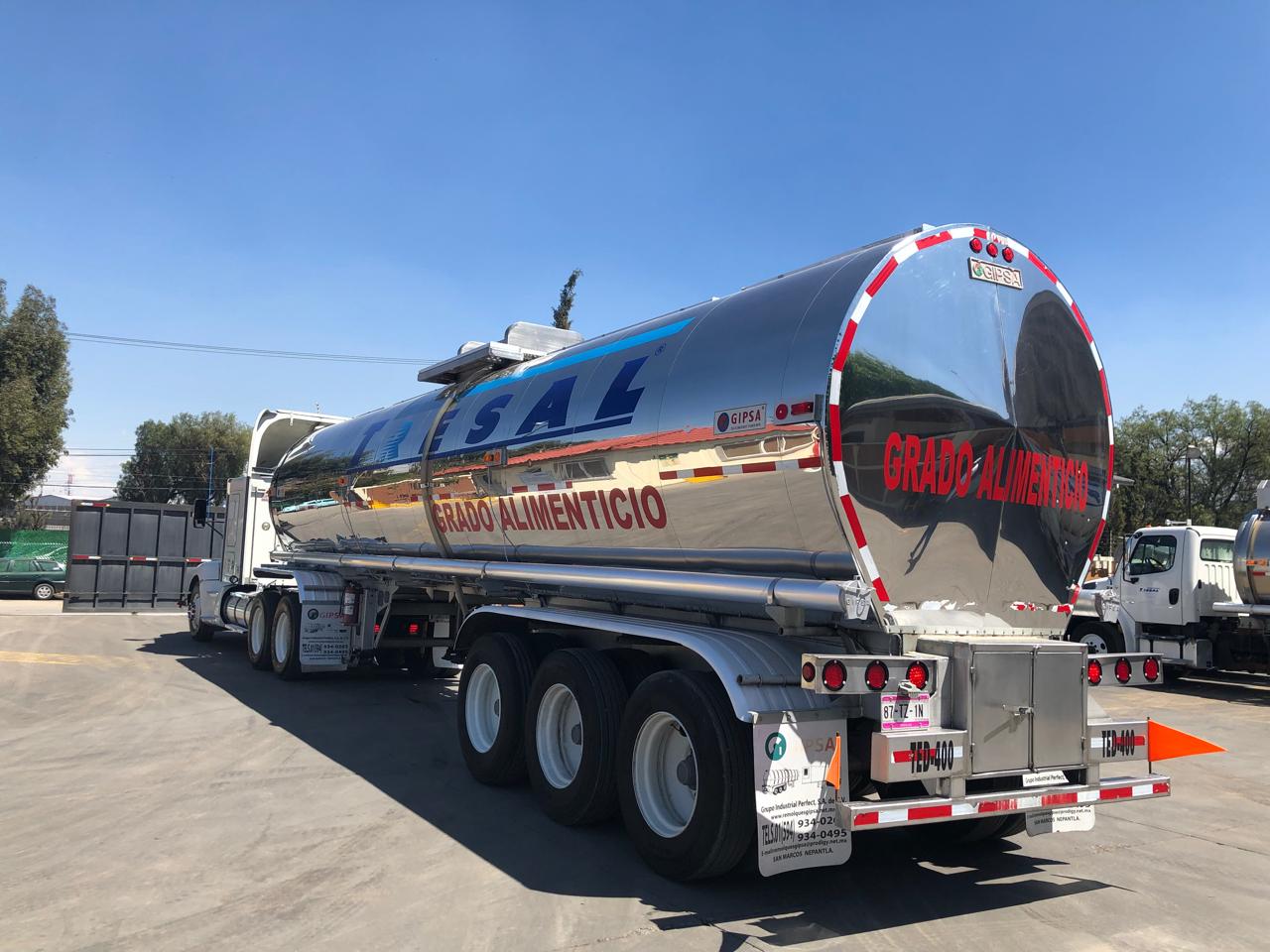
TRESAL (Transportes Especializados del Altiplano, S. de R. L. de C. V.) provides bulk food-grade liquid transport in Mexico, including vegetable oils, syrups and juice concentrates, in stainless steel 304 and 316L tank trucks with Kosher-certified interior washing. Operating from Cuautitlán Izcalli and San Luis Potosí with nationwide coverage since 1988 and ISO 9001:2015 certification.
Every day, thousands of tank trucks across Mexico move vegetable oils, high-fructose syrups, fruit juice concentrates, and other liquid ingredients that end up on millions of tables. Mexico’s food industry grew 2.49% in Q4 2024 according to INEGI data, driven by grain milling and the meat industry. Mexico is the seventh-largest food exporter worldwide, with exports exceeding $50 billion according to WTO data. Behind those figures lies a logistics chain where bulk transport is a link that rarely gets attention—but one that can ruin an entire batch if something goes wrong.
This article explains what it takes to transport bulk liquid food products, what Mexico and its main export markets require, and what a quality or procurement manager should verify before loading product into a tank truck.
When the tank is the packaging
In bulk transport of soybean, canola, palm, or sunflower oils, high-fructose and glucose syrups, fruit juices and concentrates, food-grade glycerin, USP-grade alcohols, milk and dairy derivatives—the product travels in direct contact with the tank’s interior walls. No bag, no drum, no intermediate barrier. The tank is the packaging.
And like any food packaging, three things determine whether the product arrives safe: the tank material, the quality of the prior wash, and what was inside before. Kan-Haul, a US edible oil carrier with over 100 years in the business, documents that the most frequent contaminants in vegetable oil transport come from previous load residues, inadequate cleaning, and exposure to oxygen, water, light, or excessive heat during transit.
The question of “what was in the tank before” is so critical that an international code is dedicated exclusively to it: the Codex Alimentarius Code of Practice for the Storage and Transport of Edible Fats and Oils in Bulk (CAC/RCP 36-1987), published by the FAO and WHO, last revised in 2024. This code maintains two lists: one of acceptable previous cargoes and another of expressly prohibited ones. A tank that carried a product from the prohibited list cannot be used for edible oils, regardless of how it is cleaned.
What happens in practice: cross-contamination
In the United States, where trucking moves over 70% of all food according to data cited by Matlack Leasing, cross-contamination between loads is one of the most documented problems. Bulk Connection, a bulk liquid logistics operator based in Connecticut, explains that the tank selection process includes verifying “incompatible priors” (previous loads incompatible with the product to be loaded)—a term rarely heard in Mexico but part of the daily vocabulary of any food cargo dispatcher in the US and Canada.
In Canada, Vedder Transport moves over one million liters of raw milk daily between farms and processing plants, plus canola oil, juices, and spirits throughout North America. Their tank trucks are washed at certified food-grade stations before each new load—not at the end of the day, not once a week, but before each individual load.
In France, Trucks Mag magazine describes how food and chemical tankers are “two different worlds” despite looking similar from outside. The absolute priority in food tankers is hygiene: each citerne must be of inox alimentaire (food-grade stainless steel), easy to clean and disinfect. France’s FNTR publishes a specific manual for interior washing of food tankers, and ANIA (the National Association of Food Industries) issued guidelines in 2020 for the interior cleanliness of tankers used in food transport.
Regulatory framework: four countries, one principle
Regulations vary by country, but the principle is universal: the carrier is responsible for ensuring the food is not contaminated during transit.
Mexico: COFEPRIS and NOM-251-SSA1-2009
In Mexico, the health authority is COFEPRIS. NOM-251-SSA1-2009, published in the DOF on March 1, 2010, establishes hygiene requirements for the entire food chain, including transport. It requires clean and disinfected vehicles, proper temperature control when applicable, and trained personnel. HACCP is recommended but not mandatory under NOM-251, though in practice multinational clients require it as a de facto standard. SICT also regulates ground transport: NOM-012-SCT-2-2017 sets weight and dimension limits, and NOM-020-SCT-2-2022 defines tank truck specifications.
United States: the FSMA Sanitary Transportation Rule
The FSMA (Food Safety Modernization Act) of 2011 shifted the FDA from reactive to preventive. Its Sanitary Transportation Rule (21 CFR Part 1, Subpart O, effective since 2016) applies to shippers, loaders, carriers, and receivers—including Mexican companies shipping food to the US under the USMCA. It requires written procedures, training, 12-month record retention, and expressly prohibits practices that create risk, such as inadequate vehicle cleaning between loads.
Canada: Safe Food for Canadians Regulations
The SFCR (effective since 2019), administered by the CFIA, establishes three pillars: licensing, preventive controls with documented HACCP plans, and traceability. The regulations include specific requirements for sanitary conditions during transport.
European Union: Regulation EC 852/2004 and the EFTCO system
Regulation 852/2004 requires all stages of the food chain—including transport—to meet hygiene requirements, and mandates (not recommends) HACCP. In practice, the EFTCO system is the de facto standard for documenting tank cleaning. The EFTCO Cleaning Document (ECD) records each wash process with uniform codes understandable in 23 languages. In France, the Qualimat certification complements the European system with specific requirements for food transport.
Tank material: 304 vs. 316L
Food tankers are built from stainless steel. Grade 304 is most common: corrosion-resistant, smooth surface, easy to clean—suitable for vegetable oils, syrups, and purified water. Grade 316L adds molybdenum for chloride corrosion protection—necessary for citrus juices, vinegar, or saline solutions. Incorrect selection can cause pitting corrosion and product contamination. The Codex Alimentarius (CAC/RCP 36) specifies stainless steel as the preferred material for refined edible oils and fats. For more detail, see our article Stainless Steel 304 vs. 316L for Tank Trucks.
Washing: where everything is won or lost
Between discharge and the next load, the tank must be clean, dry, odor-free, and free of contaminants—including allergens. Sani-Matic notes that while tanks can be manually washed, CIP (Clean-in-Place) systems with spray balls provide more consistent and verifiable cleaning.
In France, Fraikin explains that in food tankers the bacteriological risk is particularly high in piping and fittings, not just the main tank. For kosher products, washing requires rabbinical supervision, defined water temperatures, and certified cleaning agents. See our articles Kosher Tank Truck Washing and 5 Dangerous Mistakes in Tank Truck Washing.
How to evaluate a carrier for bulk food products
When selecting a carrier, verify: that tank trucks are stainless steel 304 or 316L as required by the product; that the carrier operates its own wash facilities or uses certified centers with documented records; that it holds ISO 9001 certification as a base quality management system and complies with NOM-251-SSA1-2009; and if the product is export-bound, that the carrier demonstrates familiarity with FSMA (US), SFCR (Canada), or the EFTCO system (Europe). For a more complete guide, see How to Choose a Bulk Chemical Carrier in Mexico.
TRESAL: bulk food product transport
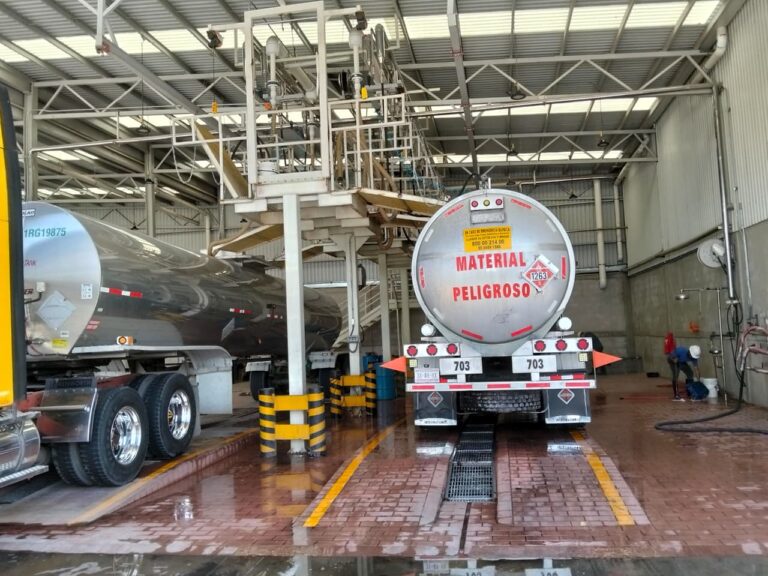
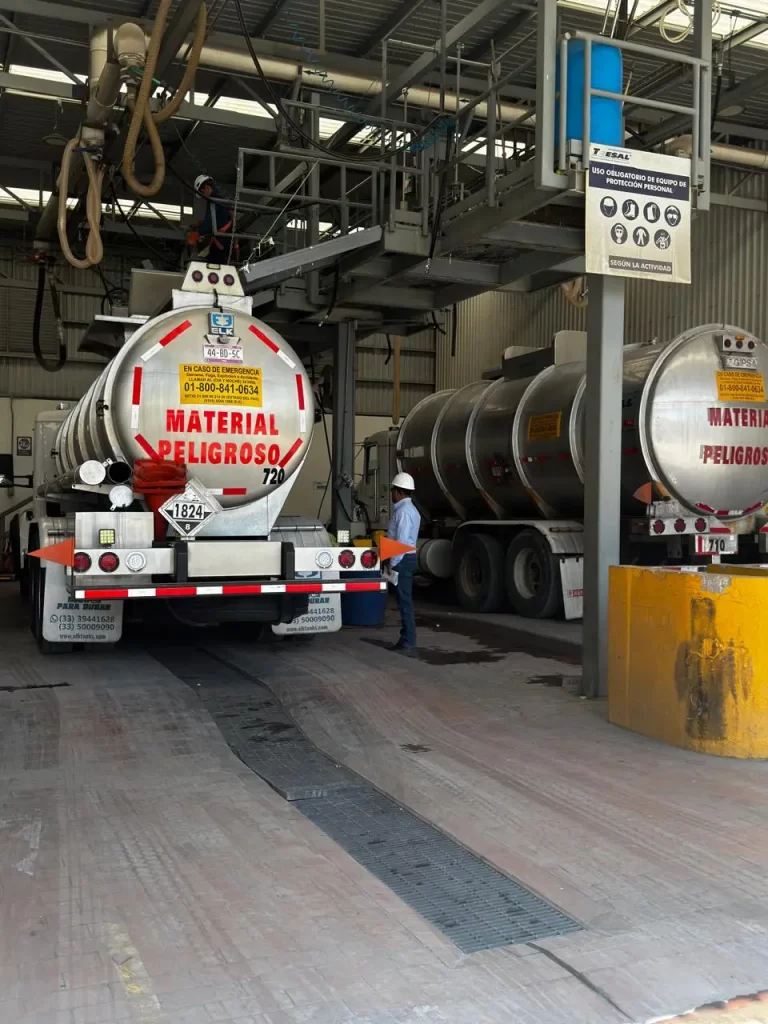
TRESAL is a Mexican company with over 38 years of experience in specialized bulk transport, operating from Cuautitlán Izcalli (State of Mexico) and San Luis Potosí. Our core business is chemical transport, but we operate food-grade stainless steel tank trucks (304 and 316L) and own wash facilities at both locations, with kosher washing capability. Our ISO 9001:2015 certification backs every operation with a documented and auditable quality management system.
Frequently Asked Questions
What type of stainless steel is used for bulk liquid food transport?
The most common grades are 304 (for oils, syrups, dairy) and 316L (for acidic products like citrus juices or vinegar). The choice depends on the chemical aggressiveness of the product being transported.
Which Mexican standard regulates food transport?
NOM-251-SSA1-2009 from COFEPRIS establishes hygiene practices for the entire food chain, including transport. For tank trucks specifically, NOM-020-SCT-2-2022 defines technical specifications.
How often should a food-grade tank truck be washed?
Before every new load, without exception. International operators like Vedder Transport in Canada wash their units before each individual load, not per shift or per day.
Does the US FSMA apply to Mexican carriers?
Yes. The Sanitary Transportation Rule (21 CFR Part 1, Subpart O) applies to all actors in the chain, including Mexican carriers moving food to the United States under the USMCA.
What is the Codex Alimentarius CAC/RCP 36?
It is the FAO/WHO international code for the storage and transport of edible fats and oils in bulk. It maintains lists of acceptable and prohibited previous cargoes, and is the global reference for determining load compatibility.
References
Mexico
1. NOM-251-SSA1-2009 — Food hygiene practices. COFEPRIS. DOF
2. NOM-012-SCT-2-2017 — Maximum weights and dimensions. SICT.
3. NOM-020-SCT-2-2022 — Tank truck specifications. SICT.
4. Secretaría de Agricultura / INEGI — Mexican food industry: 2.49% growth Q4 2024. gob.mx
United States
5. FDA — FSMA Sanitary Transportation Rule (21 CFR Part 1, Subpart O). FDA
6. Kan-Haul — Shipping Edible Vegetable Oils. kanhaul.com
7. Bulk Connection — Bulk Liquid Food-Grade Transportation. bulkconnection.com
8. Matlack Leasing — Food Grade Tanker Suitability. matlackleasing.com
9. Sani-Matic — Tank Cleaning Equipment. sanimatic.com
10. Virginia Tech / VCE — Sanitary Transportation Rule Guide. Virginia Cooperative Extension.
Canada
11. Safe Food for Canadians Regulations (SFCR) — SOR/2018-108. CFIA. Legal text
12. Vedder Transport — Bulk Liquid Edible Transportation. vtlg.com
13. ShipNorthAmerica — Food Grade Liquid Transportation Tips. shipnorthamerica.com
France / European Union
14. Regulation (EC) 852/2004 — Food hygiene. EUR-Lex
15. ANIA — Interior cleanliness guidelines for food tankers (2020). ania.net
16. FNTR — Interior washing manual for food tankers. fntr.fr
17. Trucks Mag — Food vs. chemical tankers. trucksmag.fr
18. Fraikin — Secure liquid food transport. fraikin.fr
19. EFTCO — European Cleaning Document. eftco.org
International Framework
20. FAO / WHO — Codex Alimentarius, CAC/RCP 36-1987, Rev. 2024. UN international standard — supranational framework of global application.