

Tank Truck Washing: Process, Compatibility and Responsibility
Tank truck washing is one of the most important, and least visible, processes in the specialized transport of bulk liquid chemicals and food-grade products. Every time a unit finishes a trip and gets ready for its next load, what happens inside the tank determines whether the next product arrives in full integrity or whether cross-contamination, loss of product quality, or even safety incidents occur.
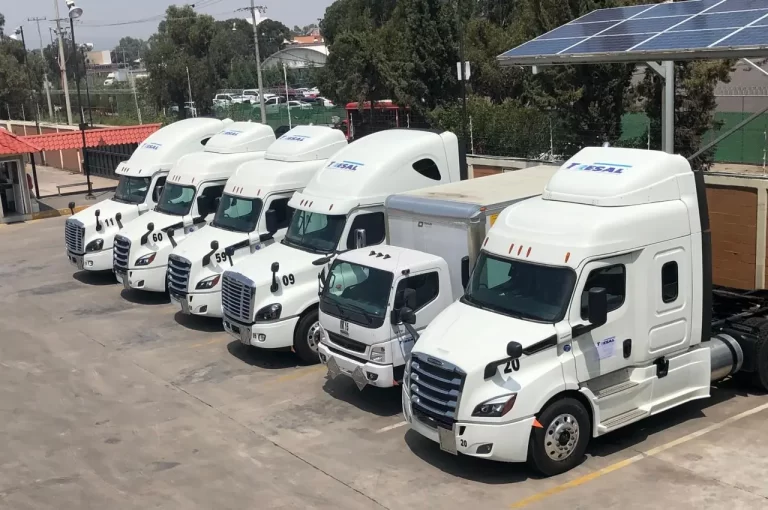
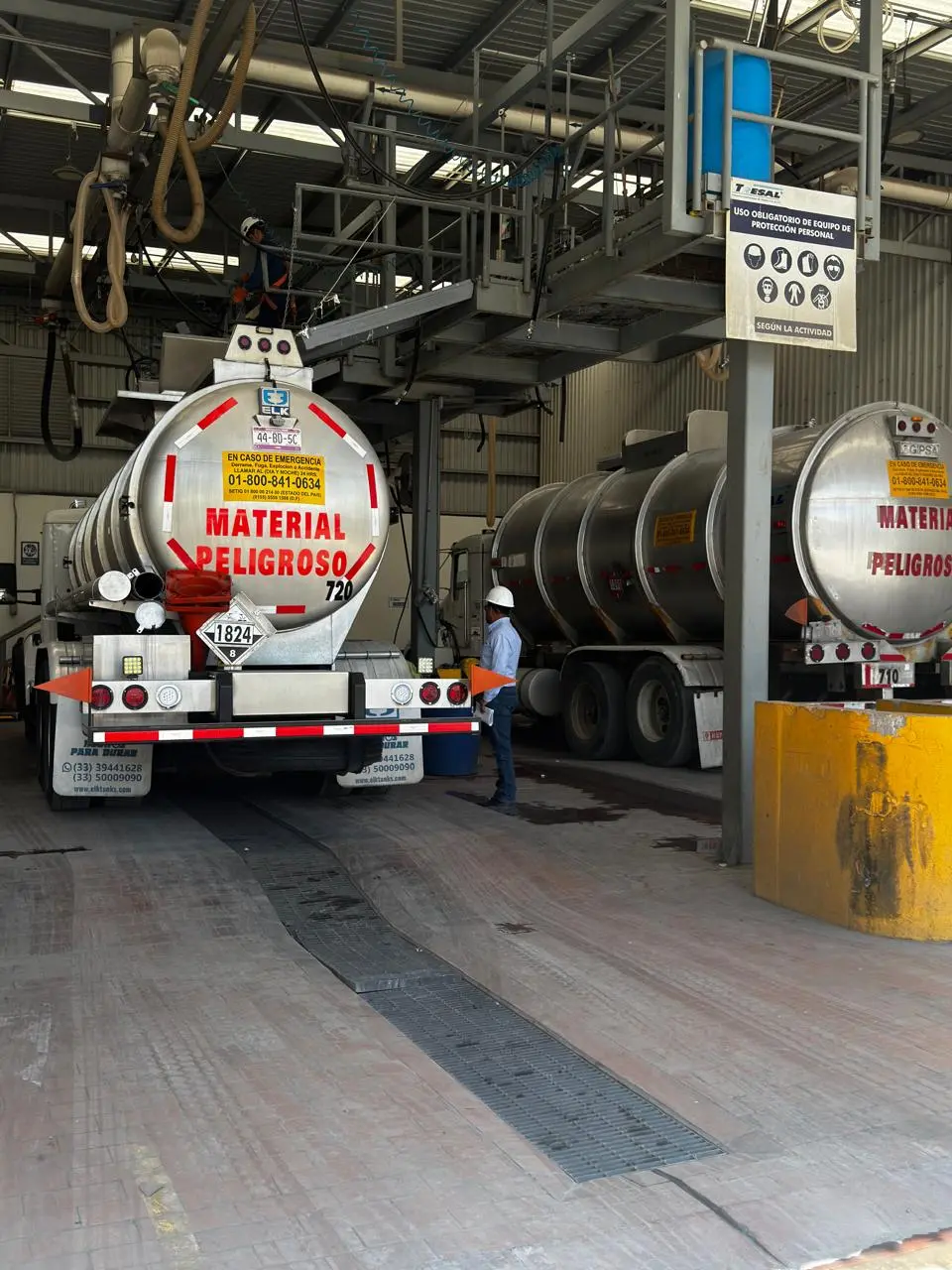
At TRESAL we operate our own washing centers at our two bases: Cuautitlán Izcalli (State of Mexico) and San Luis Potosí. This infrastructure, developed over 38 years of operation, is one of the pillars that allows us to offer reliable service for both our tank truck fleet and the tortons we operate.
What is tank truck interior washing?
Interior washing is the set of operations performed inside the tank, after the previous product has been unloaded, to leave it in suitable condition for the next load. It is not a surface cleaning: it involves removing residues, eliminating odors, neutralizing traces of incompatible products, and leaving the interior in the state required by the product to be loaded next.
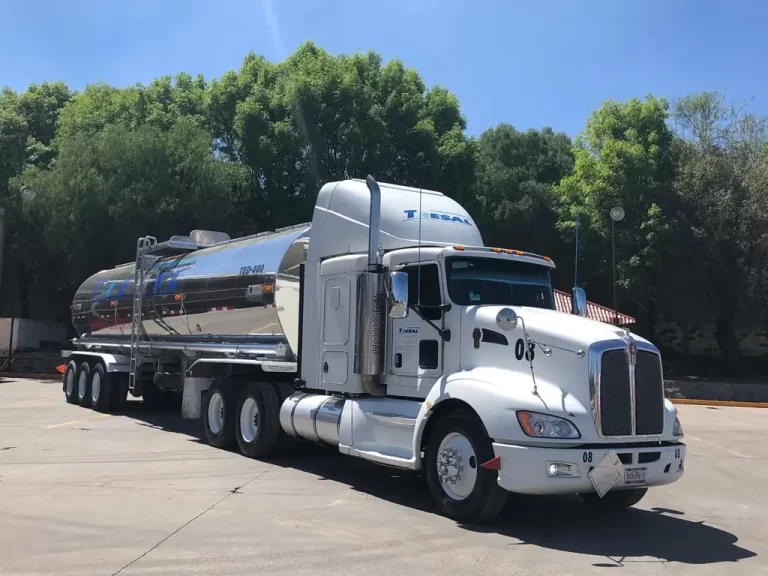
This process applies equally to our fifth-wheel tank trucks (semi-trailers of up to 45,000 liters) and to our tortons (rigid trucks of smaller capacity). Both unit types go through certified washing between one load and the next.
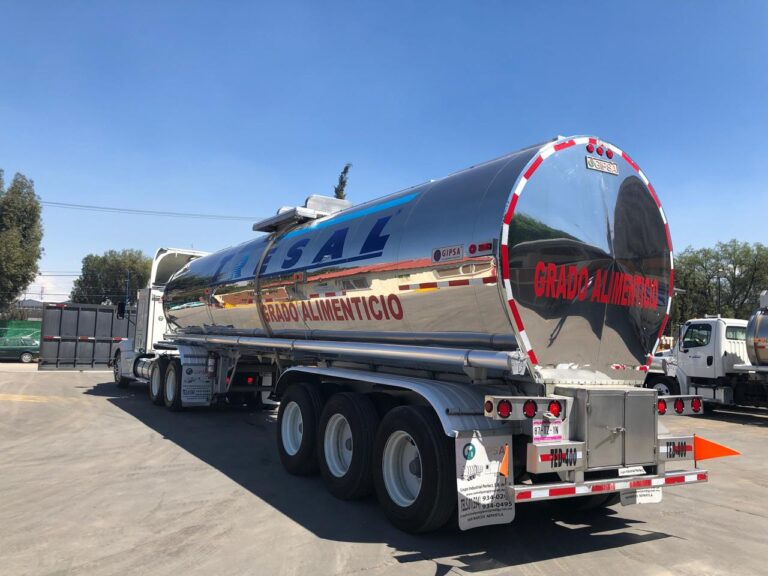
In specialized transport, tanks are built in stainless steel SS 304 or SS 316L (the latter for more aggressive products such as caustic soda, acetic acid, or acetic anhydride), and washing must respect the properties of these materials. You can learn more about our fleet on the Services page.
Why is interior tank truck washing critical?
There are three reasons why tank truck washing does not allow shortcuts:
1. Quality of the client’s product. In liquid transport, minimal contamination of a batch can push thousands of liters out of specification. A residue from the previous product, a lingering odor, or a poorly rinsed detergent trace can turn a high-value load into a total loss.
2. Operational safety. In hazardous materials transport, mixing traces of incompatible products can trigger chemical reactions inside the tank. Proper washing between loads is not a preference: it is a safety condition required by SICT regulations.
3. Regulatory compliance and client audits. Food industry clients and chemical clients handling high-purity products audit their carriers regularly. Washing records, documented procedures, and corresponding certificates are part of what TRESAL presents in audits, aligned with our ISO 9001:2015 certification. The company has maintained this certification in its transport operation for the past 12 years.
“At TRESAL our commitment is to provide our clients with Hazardous Materials, Food and General Cargo Transportation services, as well as Driver Training, that allow us to contribute to the safety of their processes.”
TRESAL Quality Policy, ISO 9001:2015 system
The golden rule: a dirty tank is never loaded
Before going into the process detail, there is one rule at TRESAL that is non-negotiable and worth making explicit:
A tank with residue from the previous product can never receive a different product without prior certified washing. This block is absolute. It is not authorized by exception. It is not flexed for scheduling urgency. All operational compatibility rules we describe next apply only to tanks that have already gone through certified washing.
Compatibility matrix: not every wash enables every load
This is a point many new clients are unaware of, and it separates a carrier with serious procedure from an improvised one:
Even with a properly washed tank, not every product can be loaded after every previous product. There are combinations that remain blocked because, even if the tank itself is clean, the unit’s gaskets, seals, hoses, valves and pumps can retain traces of the previous product that, on contact with the new product, trigger chemical reactions, cross-contamination, or degradation of elastomeric components.
At TRESAL we maintain a compatibility matrix with more than 200 documented rules defining which products may be loaded after which previous products, even on washed units. Among the most restrictive cases:
- After transporting Propionic Acid, more than 30 combinations of subsequent product are blocked.
- After 2 Ethylhexanol, nearly 20 subsequent products are blocked.
- After Phosphoric Acid or Soybean Oil, about 14 subsequent products require specific authorization or are not authorized.
When a combination falls outside the matrix, the answer is not “wash harder.” The answer is that unit cannot take that load. If the client absolutely requires that sequence, we evaluate gasket and seal replacement, reinforced washing with a special procedure and explicit authorization, or reassignment to another unit.
This discipline is what protects the client, the operator and the asset.
How does the TRESAL washing process work?
Without entering operational details that correspond to our internal know-how, the washing process we execute combines several technical resources:
- Hot water at high pressure as the main mechanical element for residue removal.
- Steam applied when the type of product previously transported requires it.
- Specialized detergents selected according to the chemical nature of the residue to be removed and of the next product.
- Temperature and time control defined by documented procedure for each previous-product / next-product combination.
- Interior drying at the end of the cycle, to prevent residual moisture from affecting the next load.
- Visual inspection at process completion, recorded in the cycle documentation.
Each wash generates a certificate that accompanies the unit to its next loading point. This certificate is part of the traceability that clients audit and archive.
| Stage | What is done | Standard |
|---|---|---|
| Hot water under pressure | Mechanical removal of residues from the previous product. | Main element of the cycle at both owned centers. |
| Steam | Applied when the previously transported product requires it. | Based on the previous product type. |
| Specialized detergents | Selected according to the chemical nature of the residue and the next product. | Documented procedure per product combination. |
| Temperature and time control | Parameters defined for each previous-product and next-product combination. | Documented procedure. |
| Interior drying | Removal of residual moisture at the end of the cycle. | Before the unit is released. |
| Visual inspection and certificate | Cycle record and issuance of the washing certificate. | Traceability auditable by the client. |
Differentiated procedures: chemical, food-grade, and Kosher
At TRESAL we operate differentiated procedures depending on the type of previous product and the type of next product:
For chemical transport, the objective is to neutralize any trace of the previous product, remove residues adhered to tank walls, and leave the interior in conditions compatible with the next load. Steps vary according to the specific combination authorized by the compatibility matrix.
For food-grade transport, the standard is more demanding. The unit must be free of odors, with no visual trace of residue, and ready to receive products that will end up in the food chain. Procedures are executed under additional controls.
For food-grade Kosher transport, there is an additional level. TRESAL holds a certification issued by KA Kosher (Vaad Hakashrut KA) recognizing our tank washing station both to preserve the kosher status of units that already hold it, and to perform kasherization of tanks that were previously not kosher. This places us among the few tank truck operators with this capability in Mexico. Kosher washing and kasherization require rabbinical authorization, a specific procedure, and direct supervision by rabbinical authority when applicable. The corresponding certificate is delivered to the client under documentary control.
This differentiation is not improvised: it is documented within the TRESAL ISO 9001:2015 quality management system and is audited periodically by NYCE S.C., a certification body accredited by EMA.
Owned washing centers in Cuautitlán Izcalli and San Luis Potosí
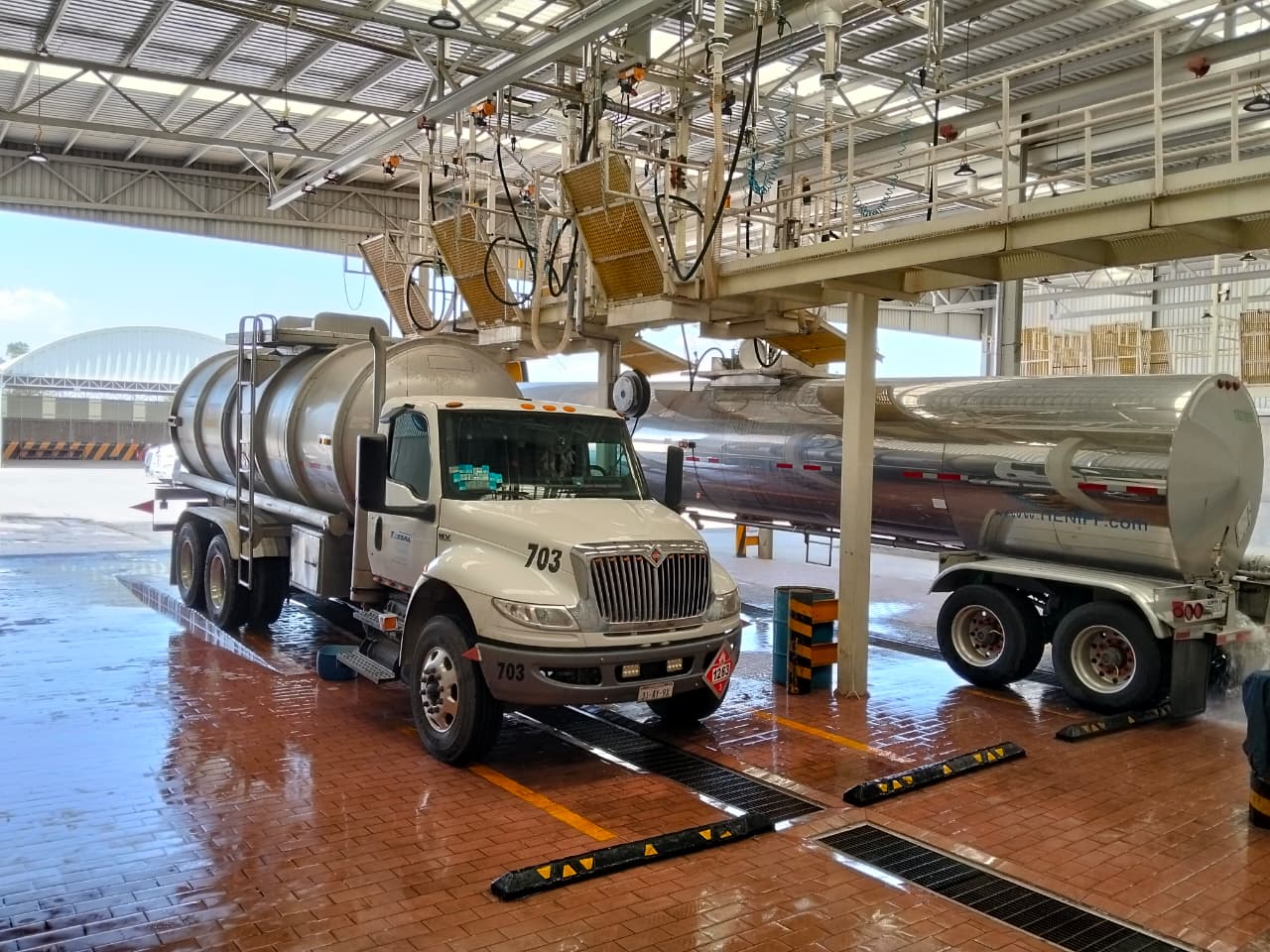
One of the strategic decisions that defines TRESAL is operating our own washing centers rather than depending on third-party facilities. This gives us five concrete advantages:
1. Full process control. We do not depend on third-party availability or procedures. Every wash is executed under our quality system and our compatibility matrix.
2. Two strategic locations. Our Cuautitlán Izcalli base covers the country’s central corridor and connections with the port of Veracruz and the Bajío. Our San Luis Potosí base serves the Altiplano region, the industrial north, and routes toward the U.S. border. When a unit finishes discharge near either base, it enters washing without long detours.
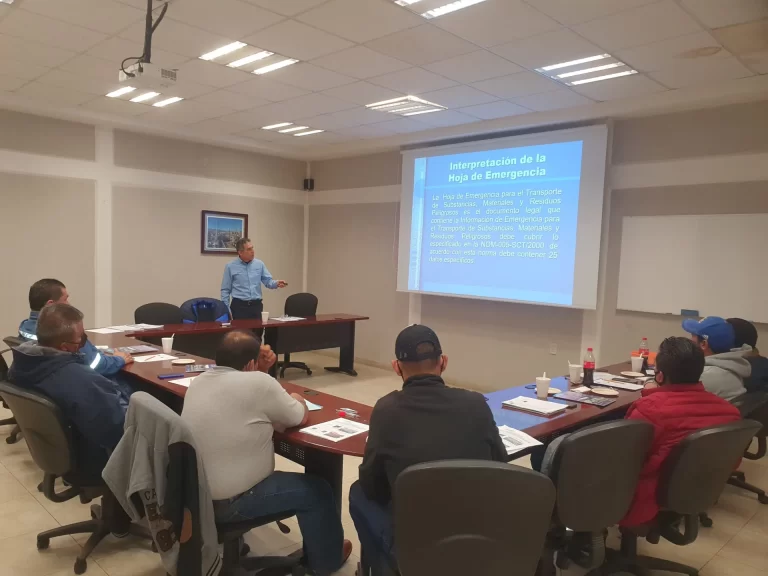
3. In-house trained personnel. TRESAL operators, including washing bay staff, are trained at our own Training Center, recognized by SICT since September 2001 under registration number SCT.CC/000096 for the Hazardous Materials and Waste modality. This Training Center is part of the scope of our ISO 9001:2015 certification together with the transport operation. This approach (training within our own facilities with instructors who are active carriers themselves) ensures that the personnel executing each wash understands both the theory and the operational reality of the product being handled.
4. Fast turnaround. The time between a unit discharging, entering the wash bay, and becoming available for the next load is one of the factors that directly impact fleet productivity. By operating our own centers, we manage cycles without external queues.
5. Documentary traceability. Each wash is recorded internally, linked to the unit’s economic number, the previous product, the next product, the compatibility evaluation result, and the operator who executed the process.
Taken together, the washing operation of TRESAL, Transportes Especializados del Altiplano, rests on verifiable data: 38 years of experience in the specialized transport of chemical products, a management system certified under ISO 9001, and 100% of its own tank truck fleet built in stainless steel, which reduces residue retention on tank walls. The two washing centers, located in Cuautitlán Izcalli (State of Mexico) and San Luis Potosí, apply the same compatibility matrix, covering more than 60 different chemical products, and the same documented procedure, so that the client receives the same interior cleaning standard regardless of which facility processes the unit. Every wash is recorded with a certificate for traceability and audit purposes, available to the client as part of each unit’s file, regardless of whether the tank belongs to TRESAL or to a third party.
Washing is not an isolated service: it supports TRESAL’s core business, the bulk transport of chemical products and Class 3 and Class 8 hazardous materials throughout Mexico, in addition to food-grade products.
Shared responsibility: the client’s final inspection
This is a point worth stating explicitly, because it is part of the standard responsibility framework in specialized transport:
The TRESAL washing process delivers the unit in optimal condition for its next load. However, in line with industry best practices and the shared-responsibility protocol, the final inspection and approval of cleanliness always rests with the receiving client before loading begins.
This verification at the loading point is the last quality control, and it is a standard and recommended practice in international liquid chemical and food-grade transport. The client receiving the unit is the one who most accurately knows the purity requirements of their product, and is the one who must give the final approval before loading starts.
At TRESAL we facilitate this inspection by delivering the unit with the corresponding washing certificate and with physical access to the tank interior so that the client’s personnel can perform whatever verification they require: visual inspection, sampling, or any internal protocol they have established.
Understanding and respecting this shared responsibility is part of operating seriously in this sector.
Conclusion
Tank truck and torton washing is not a minor operational step: it is one of the processes where specialized transport service quality is won or lost. Owning washing centers at two strategic locations, maintaining a documented compatibility matrix with more than 200 rules, running differentiated procedures for chemical / food-grade / Kosher transport, training personnel at our own Training Center recognized by SICT, and keeping full traceability are the differentiators TRESAL has developed over 38 years of operation.
If your company transports bulk liquid chemicals or food-grade products and is looking for a carrier whose washing operation can be audited with confidence, get in touch.
References
Mexico
1. NOM-019-SCT2/2015 — Requirements for cleaning and residue control in tank trucks for hazardous materials transport. SICT / PLATIICA portal.
2. NOM-020-SCT-2-2022 — Design and construction specifications for tank trucks (SICT 406, 407, 412). Chemical compatibility requirements for tank materials.
United States
3. “How Is a Bulk Trailer Tank Cleaned?” — Bulk Connection, September 2024. Detailed breakdown of cleaning methods by product type (caustic, food-grade, kosher) and costs across the U.S. and Canada.
4. Bulk Transporter — Cargo Tank Cleaning Directory — Directory of 400+ tank wash facilities in the U.S. Industry-leading bulk transport publication.
5. “The Role of a Kosher Wash in Food-Grade Bulk Transport” — Bulk Connection, February 2024. Kosherization process: caustic wash, acid wash, final rinse, and rabbinical documentation.
France / European Union
6. Godefroy Transports — Lavage de citerne — French carrier with EFTCO (European Cleaning Document) certification and SQAS evaluation. European benchmark for chemical and food-grade tank cleaning traceability.
7. “Station de lavage intérieur citerne: nos conseils” — CSL, France. Guide to choosing a wash station: APLICA and SQAS certifications, effluent management, and traceability.